
Product Description
Durable Motor Shaft Coupling Flexible Couplings for Construction Passenger Hoist
Product Description
Plum-shaped flexible coupling consists of 2 prongs of the same shape with the coupling half and elastic components, the use of plum-shaped elastic element is placed between the 2 halves of the coupling prongs in order to achieve the 2 coupling halves connection. With a two-axis compensation relative offset , shock absorption, cushioning , small radial size , simple structure, no lubrication , high load capacity , easy maintenance, etc. , but replace the elastic element coupling halves need to move axially . Suitable for connecting 2 coaxial, frequent starting , low-speed , medium power transmission shaft lines require high reliability work site, not suitable for heavy load and axial dimensions after restricted , replace the elastic element of the difficulties the 2 axes site .
|
Model |
Rated Torque Tn |
Allowable Rotation Speed |
Bore Diameter d1 , d2 , dz |
Bore Length L, L1 |
Weight |
| N.m | r/min | mm | mm | kg | |
|
CLSJ50 |
28 |
15000 |
10-24 |
22-38 |
1.00 |
|
CLSJ70 |
112 |
11000 |
12-38 |
27-60 |
2.50 |
|
CLSJ85 |
160 |
9000 |
16-38 |
30-60 |
3.42 |
|
CLSJ105 |
355 |
7250 |
18-42 |
30-84 |
5.15 |
|
CLSJ125 |
450 |
6000 |
20-55 |
38-84 |
10.1 |
|
CLSJ145 |
710 |
5250 |
25-65 |
44-107 |
13.1 |
|
CLSJ170 |
1250 |
4500 |
30-85 |
60-132 |
21.2 |
|
CLSJ200 |
2000 |
3750 |
35-95 |
60-142 |
33.0 |
|
CLSJ230 |
3150 |
3250 |
40-95 |
84-142 |
45.5 |
|
CLSJ260 |
5000 |
3000 |
45-125 |
84-172 |
75.2 |
|
CLSJ300 |
7100 |
2500 |
60-140 |
108-172 |
99.2 |
|
CLSJ360 |
12500 |
2150 |
60-150 |
107-212 |
148.1 |
|
CLSJ400 |
14000 |
1900 |
80-160 |
132-242 |
197.5 |
why choose our product
Cheaper price than CHINAMFG brands, good quality.
Features:
1. The intermediate elastomeric coupler
2. Can absorb the vibration , compensate the radial , angular and axial misalignment
3. Anti- oil and electrical insulation
4. clockwise and counterclockwise rotation characteristics are identical
5. Locate the screws
Certifications
Company Profile
FAQ
1. What are your main products?
We produce Construction Hoist (also called construction elevator, construction lift) and spare parts of it.
2. Are all Construction Hoist the same from all Vendors & Manufacturers?
Our High rise building construction hoist with VFD for lifting materials and passengers have exported to Europe, Middle and southern America, most of Asia, and some countries from Africa, about 50 countries. We can well match European standards, Russia standards and America standards. We have technology for develope new design ability and we support many customer with good solutions to solve their construction site special vertical access problems.
3. Do your products have some certificates?
Yes. Our Construction Hoist have passed CE ,ISO Certificates.
4. What are the payment terms and the delivery time?
Payment terms are T/T and LC. We will ship the cargo within 7-21 days after receiving the 30% deposit.
5. Are you manufacturer or the trader?
We are manufacturer with 17 years maker experiences, have advanced production line and inspection device. Our Research and development team have got many praise from customers.
6. Will you develop distributor and sole agent?
Yes, should you have any interest to be our distributor and agent, please let us know in any ways. Sole agent is available depend on the sales turnover.
7. Where do you ship to and what countries have you done business in?
We provide quick and efficient shipping to countries all over the world from HangZhou port or other China port.
We have done business with customers in many countries, such as Mexico, Brazil, Korea, Malaysia, Thailand, India, Vietnam, Indonesia, UAE, Qatar, Kuwait,Saudi Arabia etc.
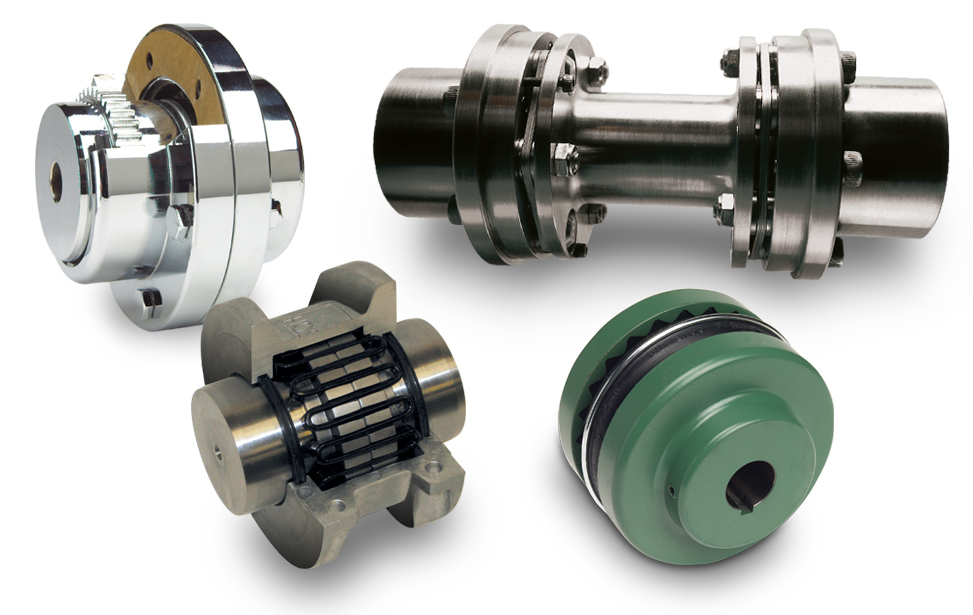
Exploring the Use of Elastomeric Materials in Flexible Motor Couplings
Elastomeric materials play a crucial role in the design and function of flexible motor couplings. These materials offer unique properties that make them well-suited for power transmission applications. Here’s an exploration of their use in flexible motor couplings:
1. Flexibility and Damping:
Elastomeric materials, such as rubber or urethane, are highly flexible, allowing them to absorb and dampen vibrations and shocks generated during motor operation. This damping property helps reduce resonance and noise, improving the overall performance of the power transmission system.
2. Misalignment Compensation:
Flexible motor couplings with elastomeric inserts can accommodate both angular and parallel misalignments between the motor and driven equipment shafts. The elastomeric material provides some radial compliance, allowing for smooth torque transmission even when the shafts are slightly misaligned.
3. Shock Absorption:
In applications where the motor or driven equipment is subjected to sudden shocks or impacts, elastomeric materials act as shock absorbers. They absorb and dissipate the impact energy, protecting the coupling and connected components from damage.
4. Low Inertia:
Elastomeric couplings typically have low inertia due to the lightweight nature of the elastomeric material. This low inertia reduces the rotational resistance and allows for rapid acceleration and deceleration of the connected equipment.
5. Corrosion Resistance:
Elastomeric materials are often resistant to corrosion, making them suitable for use in various industrial environments where exposure to moisture or chemicals may occur.
6. Electrical Isolation:
Elastomeric couplings provide electrical isolation between the motor and driven equipment shafts. This is advantageous in applications where electrical continuity must be avoided.
7. Easy Installation:
Elastomeric couplings are generally easy to install due to their simple and lightweight construction. They do not require special tools or complex alignment procedures, making them a popular choice in many applications.
8. Maintenance-Free Operation:
Properly designed and maintained elastomeric couplings can offer maintenance-free operation over extended periods. The absence of mechanical wear elements reduces the need for regular maintenance and replacement.
The use of elastomeric materials in flexible motor couplings provides numerous benefits, making these couplings suitable for a wide range of applications. Their ability to compensate for misalignment, dampen vibrations, and withstand shocks makes them particularly advantageous in situations where smooth and reliable power transmission is essential.
“`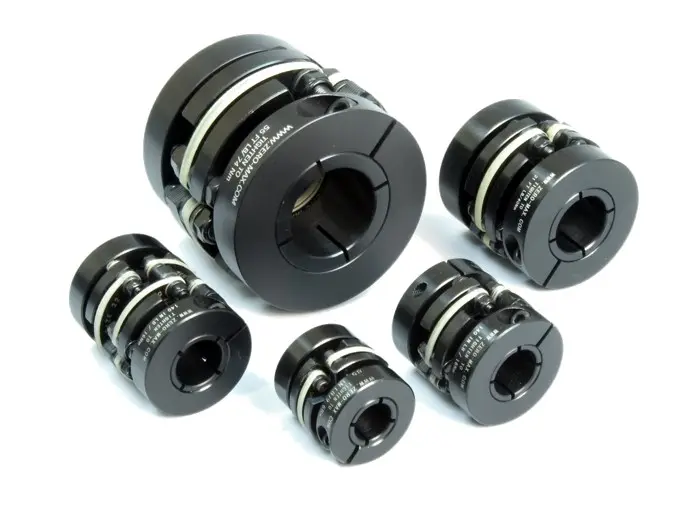
Explaining the Concept of Backlash and Its Impact on Motor Coupling Performance
Backlash is a critical factor in motor coupling performance and refers to the clearance or play between mating components within the coupling. In the context of motor couplings, it specifically relates to the amount of free movement or angular displacement that occurs when there is a change in direction of the driven shaft without a corresponding immediate change in the driving shaft.
Backlash in motor couplings can occur due to several factors:
- Manufacturing Tolerances: Variations in the manufacturing process can lead to slight clearances between coupling components, introducing backlash.
- Wear and Tear: Over time, the coupling components may experience wear, leading to increased clearance and backlash.
- Misalignment: Improper alignment between the motor and driven equipment shafts can cause additional play in the coupling, resulting in increased backlash.
The impact of backlash on motor coupling performance includes the following:
1. Reduced Accuracy:
Backlash can lead to inaccuracies in motion transmission. When the direction of rotation changes, the free play in the coupling must be taken up before torque can be effectively transmitted. This delay in motion transfer can cause positioning errors and reduced accuracy in applications requiring precise movements.
2. Vibration and Noise:
Excessive backlash can cause vibration and noise during operation. The sudden engagement of the coupling components after a change in direction can create shocks and vibrations that may affect the overall system performance and lead to premature wear of coupling components.
3. Reduced Efficiency:
Backlash results in power loss, especially in applications with frequent changes in direction. The energy required to take up the clearance in the coupling reduces the overall efficiency of power transmission.
4. Wear and Fatigue:
Repeated impacts due to backlash can accelerate wear and fatigue of coupling components, leading to a shorter lifespan and potential coupling failure.
5. Safety Concerns:
In certain applications, particularly those involving heavy machinery or high-speed operations, excessive backlash can pose safety risks. The lack of immediate response to directional changes can affect the control and stability of the equipment.
To mitigate the effects of backlash, it is essential to select motor couplings with low or controlled backlash and to maintain proper alignment during installation. Regular inspection and maintenance can help identify and address any increasing backlash, ensuring the motor coupling operates with optimum performance and reliability.
“`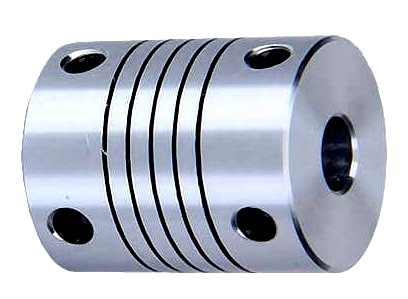
How Does a Flexible Motor Coupling Differ from a Rigid Motor Coupling?
Flexible motor couplings and rigid motor couplings are two distinct types of couplings used to connect motors to driven equipment. They differ significantly in their design, function, and applications:
Flexible Motor Coupling:
A flexible motor coupling is designed to accommodate misalignment between the motor shaft and the driven equipment shaft. It uses flexible elements, such as elastomeric materials, to provide some degree of flexibility and damping. The key differences are:
- Misalignment Compensation: Flexible couplings can handle both angular and parallel misalignment between the motor and driven equipment shafts. This flexibility reduces stress on bearings and allows for a smoother transmission of torque.
- Shock Absorption: The elastomeric elements in flexible couplings can absorb and dampen vibrations and shock loads, protecting the motor and driven equipment from damage.
- Applications: Flexible couplings are commonly used in applications where misalignment is expected, such as pumps, compressors, conveyors, and machine tools.
Rigid Motor Coupling:
A rigid motor coupling provides a solid and inflexible connection between the motor shaft and the driven equipment shaft. It does not allow any misalignment and offers a direct torque transmission path. The key differences are:
- No Misalignment Compensation: Rigid couplings do not accommodate misalignment between the motor and driven equipment shafts. Proper alignment is critical for their efficient operation.
- Stiffness: Rigid couplings offer high torsional stiffness, maintaining precise alignment between the shafts and enabling accurate torque transmission.
- Applications: Rigid couplings are used in applications where precise alignment is required, such as high-precision machine tools, robotics, and applications with low or negligible misalignment.
The choice between a flexible motor coupling and a rigid motor coupling depends on the specific requirements of the application. Flexible couplings are preferred when misalignment is expected, while rigid couplings are suitable for applications where precise alignment and direct torque transmission are essential for the system’s performance.
“`

editor by CX 2023-09-28