
Product Description
Professional supplier of Flexible coupling,Jaw coupling,Motor coupling JM2-40
Quick Details
Structure: Jaw / Spider
Flexible or Rigid: Flexible
Standard or Nonstandard: Standard
Material: Aluminium
Model Number: JM-C
Spider color: Red (Green and Yellow selected)
Specifications
1.The materials of Spider:German Bayer.
2.Hard Aluminum alloy
Your kind response of below questions will help us to recomemnd the most suitable model to you asap.
1.Areyou looking for Setscrew type or Clamp type?
2.what is coupling outer dimeter size?
3.what is coupling inner bore size and length?
4.what is coupling material(aluminium or Stainless steel )?
Dimensions:
| Model | Inner bore | D (mm) |
L (mm) |
Nominal Torque (N.m) |
The Max of Torque (N.m) |
|
| dmin | dmax | |||||
| JM2-25 | 4 | 12 | 25 | 34 | 5.0 | 10.0 |
| JM2-30 | 6 | 16 | 30 | 35 | 7.4 | 14.8 |
| JM2-40 | 10 | 24 | 40 | 66 | 9.5 | 19.0 |
| JM2-55 | 12 | 28 | 55 | 78 | 34 | 68 |
| JM2-65 | 14 | 38 | 65 | 90 | 95 | 190 |
| JM2-80 | 24 | 45 | 80 | 114 | 135 | 270 |
| JM2-95 | 30 | 55 | 95 | 126 | 230 | 460 |
| JM2-105 | 35 | 60 | 105 | 140 | 380 | 760 |
| Model | Allowable speed (rpm) |
Radial Misalignment(m.m) | Angular Misalignment(°) |
Axle Misalignment(mm) |
||
| JM2-25 | 17000 | 0.02 | 1.0 | +0.60 | ||
| JM2-30 | 12000 | 0.02 | 1.0 | +0.60 | ||
| JM2-40 | 10000 | 0.02 | 1.0 | +0.80 | ||
| JM2-55 | 8000 | 0.02 | 1.0 | +0.80 | ||
| JM2-65 | 6000 | 0.02 | 1.0 | +0.80 | ||
| JM2-80 | 4600 | 0.02 | 1.0 | +1.00 | ||
| JM2-95 | 3800 | 0.02 | 1.0 | +1.00 | ||
| JM2-105 | 3400 | 0.02 | 1.0 | |||
Packaging Details:
Wooden or ply cases for export standard or according to the customers
Delivery Detail:3-5 days after receiving the 30% deposit
/* March 10, 2571 17:59:20 */!function(){function s(e,r){var a,o={};try{e&&e.split(“,”).forEach(function(e,t){e&&(a=e.match(/(.*?):(.*)$/))&&1
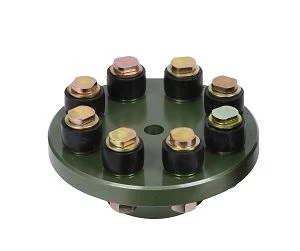
How does a flexible coupling contribute to the longevity of connected equipment?
A flexible coupling plays a crucial role in enhancing the longevity of connected equipment in various ways. It acts as a mechanical interface between two shafts, connecting them while accommodating misalignment, dampening vibrations, and transmitting torque. Here’s how a flexible coupling contributes to the longevity of connected equipment:
- Misalignment Compensation: One of the primary functions of a flexible coupling is to compensate for both angular and parallel misalignment between two shafts. Misalignment can occur due to various factors, including thermal expansion, assembly errors, or settling of foundation, which can exert excessive stress on the connected equipment. By allowing misalignment, the flexible coupling reduces the stress transmitted to the shafts and connected components, preventing premature wear and failure.
- Shock and Vibration Dampening: Flexible couplings are designed to absorb shocks and dampen vibrations that occur during operation. Vibrations and shocks can be detrimental to connected equipment, leading to fatigue, wear, and premature failure of components. The coupling acts as a buffer, reducing the impact of vibrations and protecting the equipment from potential damage.
- Reduced Stress Concentration: A rigid coupling can create stress concentration points on the shafts, leading to fatigue and cracking over time. Flexible couplings distribute the load more evenly along the shafts, reducing stress concentration and minimizing the risk of failure.
- Transmitting Torque Smoothly: Flexible couplings transmit torque from one shaft to another smoothly, without introducing sudden torque spikes or shocks. This even torque transfer prevents sudden loading on connected equipment, minimizing the risk of damage or accelerated wear on gears, bearings, and other components.
- Controlling Torsional Vibrations: In systems where torsional vibrations are a concern, certain types of flexible couplings are designed to address this issue. These couplings help control torsional vibrations, which can be damaging to the equipment and cause premature failure.
- Thermal Expansion Compensation: When the equipment operates at different temperatures, thermal expansion can lead to misalignment between the shafts. A flexible coupling can accommodate the thermal expansion, ensuring that the connected equipment remains aligned and preventing stress on the components.
- Isolation from External Forces: External forces like impact loads or shaft disturbances can affect the connected equipment. A flexible coupling isolates the equipment from these external forces, protecting it from potential damage.
By providing these essential functions, a flexible coupling helps extend the lifespan of connected equipment by reducing wear and tear, preventing premature failures, and ensuring smooth, reliable operation. The longevity of the connected equipment ultimately results in reduced maintenance costs and increased productivity.
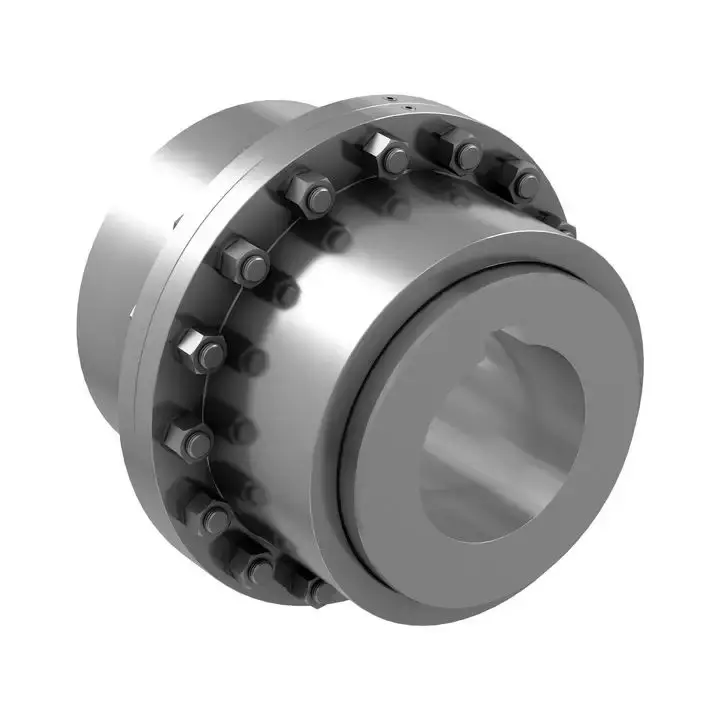
Can flexible couplings be used in marine and automotive applications?
Yes, flexible couplings are commonly used in both marine and automotive applications. They offer various advantages that make them suitable for these industries:
- Misalignment Compensation: In marine and automotive systems, there can be misalignments due to factors such as hull flexing in marine vessels or engine movements in vehicles. Flexible couplings can accommodate these misalignments, ensuring efficient power transmission between the engine and the propeller or wheels.
- Vibration Damping: Both marine and automotive environments experience vibrations from engines, propellers, or road conditions. Flexible couplings help dampen these vibrations, reducing wear on components and enhancing the comfort of passengers or crew members.
- Shock Load Absorption: Marine vessels and vehicles can encounter shock loads during operation, especially in rough sea conditions or uneven terrains. Flexible couplings can absorb and dissipate the impact of these shock loads, protecting the drivetrain and transmission components.
- Compact Design: Space is often limited in marine vessels and automotive systems. Flexible couplings come in various compact designs, making them suitable for applications with restricted installation space.
- Corrosion Resistance: Marine environments expose components to corrosive seawater, while automotive systems may encounter exposure to road salt and other corrosive substances. Flexible couplings made from corrosion-resistant materials, such as stainless steel or non-metallic compounds, are ideal for these applications.
- Easy Maintenance: Flexible couplings with self-lubricating features or low maintenance requirements are well-suited for marine and automotive applications, where regular maintenance can be challenging.
- High Torque Capacity: Automotive systems, especially in heavy-duty vehicles, require couplings that can handle high torque levels. Flexible couplings designed for automotive use offer high torque capacity and reliability.
Overall, the adaptability, vibration damping, and misalignment compensation provided by flexible couplings make them suitable for various marine and automotive applications. Whether used in boats, yachts, ships, cars, trucks, or other vehicles, flexible couplings contribute to smooth and reliable power transmission, leading to improved performance and reduced maintenance requirements.
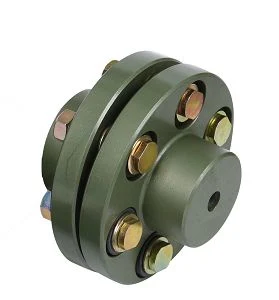
How does a flexible coupling impact the overall reliability of connected equipment?
A flexible coupling significantly impacts the overall reliability of connected equipment in several ways:
- Misalignment Compensation: Flexible couplings can accommodate both angular and parallel misalignment between connected shafts. By allowing for misalignment, the coupling reduces the stress and wear on bearings, seals, and other rotating components. This feature prevents premature failure of these components, contributing to improved reliability and extended equipment lifespan.
- Vibration Damping: Flexible couplings possess inherent damping properties due to their elastomeric or flexible elements. These elements absorb and dissipate vibrations generated during the operation of machinery. By dampening vibrations, the coupling protects the connected equipment from excessive oscillations, reducing fatigue and preventing mechanical failures. This enhanced vibration control increases the reliability of the system.
- Shock Load Absorption: In applications with sudden load variations or shock loads, such as in heavy machinery or high-speed equipment, a flexible coupling acts as a shock absorber. It can absorb and dissipate the impact energy, protecting the machinery from damage caused by sudden loads. The ability to absorb shock loads contributes to the overall reliability of the connected equipment.
- Reduced Wear and Tear: The flexibility of the coupling minimizes stress and wear on rotating equipment. It allows for slight movements and misalignments, reducing friction and stress on bearings and other critical components. This reduction in wear and tear lowers the frequency of maintenance and replacement, increasing the overall reliability of the equipment.
- Compensation for Thermal Expansion: Temperature changes in machinery can lead to thermal expansion or contraction of shafts. A flexible coupling can compensate for these thermal effects, ensuring that the machinery remains properly aligned even as temperature conditions fluctuate. This compensation prevents binding and misalignment, promoting reliable performance.
- Protection Against Overloads: Flexible couplings help protect connected equipment from overloads and torsional vibrations. They act as a mechanical fuse, disconnecting the driveline when an overload occurs, thus preventing damage to expensive machinery. This safety feature enhances the overall reliability and reduces the risk of catastrophic failures.
- Easy Maintenance and Alignment: Flexible couplings are designed for easy installation and alignment. This feature simplifies maintenance procedures, making it easier to inspect and replace couplings when necessary. Properly aligned couplings lead to improved equipment performance and longevity, enhancing overall reliability.
By compensating for misalignment, damping vibrations, absorbing shock loads, reducing wear and tear, and providing other protective features, a flexible coupling significantly improves the reliability of connected equipment. It extends the lifespan of critical components, minimizes downtime, and ensures smooth and efficient operation, making it a valuable component in various industrial applications.


editor by CX 2024-02-17