
Product Description
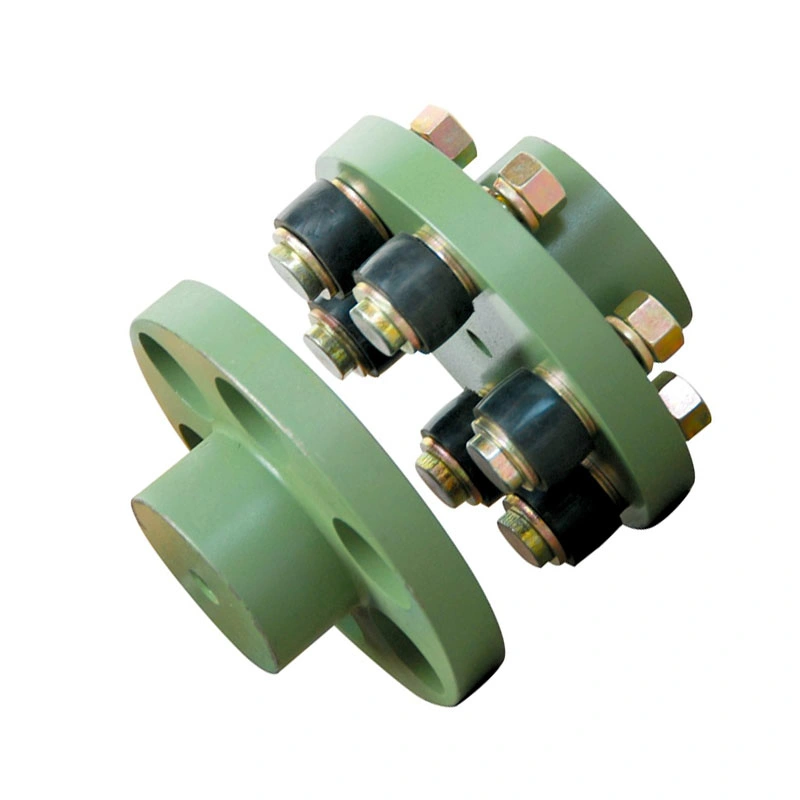
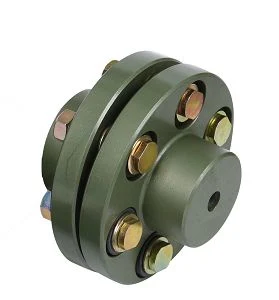
Chain Coupling high quality Rubber Shaft Tyre flexible Coupling For mechanical equipment
Product Description
Chain coupling: It comprises 2 sprockets, 1 double-row chain, and a yellow shell.
The chain coupling comprises a double-row roller chain and a pair of connecting sprockets. The connection and disassembly functions are completed through the joint of the chain. Our own factory with quality assurance produces the sprocket. Our couplings are characterized by compact structure, sturdiness, durability, safety, and easy installation.
Detailed Photos
Product Parameters
| SIZE | BORE | Pilot | A | d | O | L | I | S | B | C | BOLT | TORQUE ARM(Nm) | SPEED(rpm) | (kg.cm2) | WEIGHT |
| (kg) | |||||||||||||||
| 3012 | 12-16 | 12 | 69 | 25 | 45 | 64.8 | 29.8 | 5.2 | 63 | 10.2 | 6M | 190 | 5000 | 3.7 | 0.4 |
| 4012 | 12-22 | 12 | 77 | 33 | 62 | 79.4 | 36 | 7.4 | 72 | 14.4 | 6M | 249 | 4800 | 5.5 | 0.8 |
| 4014 | 12-28 | 12 | 84 | 43 | 69 | 79.4 | 36 | 7.4 | 75 | 14.4 | 6M | 329 | 4800 | 9.7 | 1.1 |
| 4016 | 14-32 | 14 | 92 | 48 | 77 | 87.4 | 40 | 7.4 | 75 | 14.4 | 6M | 429 | 4800 | 14.4 | 1.4 |
| 5014 | 15-35 | 14 | 101 | 53 | 86 | 99.7 | 45 | 9.7 | 85 | 18.1 | 8M | 620 | 3600 | 28 | 2.2 |
| 5016 | 16-40 | 16 | 111 | 60 | 93 | 99.7 | 45 | 9.7 | 85 | 18.1 | 8M | 791 | 3600 | 37 | 2.7 |
| 5018 | 16-45 | 16 | 122 | 70 | 106 | 99.7 | 45 | 9.7 | 85 | 18.1 | 8M | 979 | 3000 | 56.3 | 3.8 |
| 6018 | 20-56 | 20 | 142 | 85 | 127 | 123.5 | 56 | 11.5 | 105 | 22.8 | 10M | 1810 | 2500 | 137.3 | 6.2 |
| 6571 | 20-60 | 20 | 158 | 98 | 139 | 123.5 | 56 | 11.5 | 105 | 22.8 | 10M | 2210 | 2500 | 210.2 | 7.8 |
| 6571 | 20-71 | 20 | 168 | 110 | 151 | 123.5 | 56 | 11.5 | 117 | 22.8 | 10M | 2610 | 2500 | 295 | 10.4 |
| 8018 | 20-80 | 20 | 190 | 110 | 169 | 141.2 | 63 | 15.2 | 129 | 29.3 | 12M | 3920 | 2000 | 520 | 12.7 |
| 8571 | 20-90 | 20 | 210 | 121 | 185 | 145.2 | 65 | 15.2 | 137 | 29.3 | 12M | 4800 | 2000 | 812.4 | 16 |
| 8571 | 20-100 | 20 | 226 | 140 | 202 | 157.2 | 71 | 15.2 | 137 | 29.3 | 12M | 5640 | 1800 | 1110 | 20.2 |
| 1571 | 25-110 | 25 | 281 | 160 | 233 | 178.8 | 80 | 18.8 | 153 | 35.8 | 12M | 8400 | 1800 | 2440 | 33 |
| 12018 | 35-125 | 35 | 307 | 170 | 256 | 202.7 | 90 | 22.7 | 181 | 45.4 | 12M | 12700 | 1500 | 3940 | 47 |
| 12571 | 35-140 | 35 | 357 | 210 | 304 | 222.7 | 100 | 22.7 | 181 | 45.5 | 12M | 18300 | 1250 | 7810 | 72 |
| 16018 | 63-160 | 35 | 375 | 228 | 340 | 254.1 | 112 | 30.1 | 240 | 58.5 | 16M | 26400 | 1100 | 14530 | 108 |
| 16571 | 80-200 | 70 | 440 | 279 | 405 | 310.1 | 140 | 30.1 | 245 | 58.5 | 16M | 37100 | 1000 | 32220 | 187 |
| 20018 | 82-205 | 75 | 465 | 289 | 425 | 437.5 | 200 | 37.5 | 285 | 71.6 | 20M | 54100 | 800 | 50980 | 286 |
| 20571 | 100-255 | 90 | 545 | 263 | 506 | 477.5 | 220 | 37.5 | 300 | 71.6 | 20M | 77800 | 600 | 111100 | 440 |
| 24571 | 120-310 | 110 | 650 | 448 | 607 | 650 | 302.5 | 45 | 340 | 87.8 | 20M | 137000 | 600 | 310000 | 869 |
| 24026 | 150-360 | 140 | 745 | 526 | 704 | 700 | 327.5 | 45 | 350 | 87.8 | 20M | 186000 | 500 | 598500 | 1260 |
Related Products
Company Profile
FAQ
Q: Can you make the coupling with customization?
A: Yes, we can customize per your request.
Q: Do you provide samples?
A: Yes. The sample is available for testing.
Q: What is your MOQ?
A: It is 10pcs for the beginning of our business.
Q: What’s your lead time?
A: Standard products need 5-30days, a bit longer for customized products.
Q: Do you provide technical support?
A: Yes. Our company has a design and development team, and we can provide technical support if you
need.
Q: How to ship to us?
A: It is available by air, sea, or by train.
Q: How to pay the money?
A: T/T and L/C are preferred, with different currencies, including USD, EUR, RMB, etc.
Q: How can I know if the product is suitable for me?
A: >1ST confirm drawing and specification >2nd test sample >3rd start mass production.
Q: Can I come to your company to visit?
A: Yes, you are welcome to visit us at any time.
Q: How shall we contact you?
A: You can send an inquiry directly, and we will respond within 24 hours. /* March 10, 2571 17:59:20 */!function(){function s(e,r){var a,o={};try{e&&e.split(“,”).forEach(function(e,t){e&&(a=e.match(/(.*?):(.*)$/))&&1
What are the cost implications of using flexible couplings compared to other coupling types?
When considering the cost implications of using flexible couplings compared to other coupling types, several factors come into play. While flexible couplings may have a higher upfront cost in some cases, they often offer cost savings in the long run due to their advantages and reduced maintenance requirements.
- Upfront Cost: In terms of upfront cost, flexible couplings can vary depending on the design, material, and size. Some high-performance flexible couplings with specialized features may have a higher initial cost than simpler coupling types. For instance, certain specialized couplings used in demanding applications like high-speed precision machinery or corrosive environments might be more expensive.
- Maintenance Costs: Flexible couplings generally have lower maintenance costs compared to certain rigid coupling types. Rigid couplings, such as gear couplings or disc couplings, may require periodic maintenance to check for wear, lubrication, and alignment. In contrast, many flexible couplings, especially those with elastomeric elements, are self-lubricating and require little to no maintenance.
- Reduced Downtime: Due to their ability to accommodate misalignments and dampen vibrations, flexible couplings can reduce the wear and tear on connected equipment. This reduction in wear can lead to less frequent downtime for repairs or replacements, resulting in improved productivity and cost savings.
- Longevity: Flexible couplings are designed to absorb shocks and vibrations, which can extend the lifespan of connected equipment. By minimizing stress and wear on components, flexible couplings contribute to the longevity of machinery and reduce the need for premature replacements.
- Energy Efficiency: Some flexible couplings, such as beam couplings or certain elastomeric couplings, have low mass and inertia, contributing to better energy efficiency in rotating systems. By reducing energy losses, these couplings can result in cost savings over time.
- Application Specificity: In some cases, specialized coupling types might be necessary to meet specific application requirements. While these specialized couplings may have higher costs, they are designed to optimize performance and reliability in those specific scenarios.
- Compatibility and Adaptability: Flexible couplings are often more versatile in terms of accommodating shaft misalignment and different shaft sizes. Their adaptability can reduce the need for custom-made or precisely machined components, potentially saving costs in certain installations.
Overall, the cost implications of using flexible couplings compared to other coupling types depend on the specific application and its requirements. While they may have a higher initial cost in some cases, the long-term benefits, such as reduced maintenance, increased equipment longevity, and improved system efficiency, often justify the investment in flexible couplings.
How does a flexible coupling handle torsional vibrations in rotating machinery?
A flexible coupling is designed to handle torsional vibrations in rotating machinery by providing a degree of flexibility and damping. Torsional vibrations are oscillations that occur in the drivetrain due to torque variations, sudden load changes, or other transient events. These vibrations can lead to resonance, excessive stress, and premature failure of components.
Flexible couplings mitigate torsional vibrations through the following mechanisms:
- Torsional Compliance: Flexible couplings have an element, such as an elastomeric insert, that can deform or twist to absorb torsional shocks. When the drivetrain experiences torsional vibrations, the flexible element flexes, effectively isolating and dampening the vibrations before they propagate further.
- Damping: Many flexible couplings have inherent damping properties, especially those with elastomeric components. Damping dissipates the energy of the torsional vibrations, reducing their amplitude and preventing resonance from occurring.
- Tuned Design: Some flexible couplings are specifically designed with specific torsional characteristics to match the drivetrain’s requirements. By tuning the coupling’s stiffness and damping properties, engineers can ensure optimal torsional vibration control.
- Torsional Stiffness: While flexible couplings provide flexibility to absorb vibrations, they also offer a degree of torsional stiffness to maintain the torque transmission efficiency between the shafts.
It is important to select the appropriate flexible coupling based on the specific torsional characteristics and requirements of the rotating machinery. Different applications may demand different types of couplings with varying levels of flexibility and damping. High-performance flexible couplings can effectively minimize torsional vibrations, protecting the drivetrain and connected equipment from excessive stress and potential damage.
Additionally, proper alignment of the flexible coupling during installation is crucial to ensure its optimal performance in mitigating torsional vibrations. Misalignment can introduce additional stresses and exacerbate torsional issues in the system. Regular inspection and maintenance of the flexible coupling will help identify any signs of wear or damage that may affect its ability to handle torsional vibrations effectively.
Are there any limitations or disadvantages of using flexible couplings?
While flexible couplings offer numerous advantages, they do come with some limitations and disadvantages that should be considered when selecting them for specific applications. Here are some of the common limitations and disadvantages of using flexible couplings:
- Torsional Stiffness: Flexible couplings provide some level of torsional flexibility, which is advantageous in many applications. However, in systems that require high precision and minimal angular deflection, the inherent flexibility of the coupling may not be suitable. In such cases, a rigid coupling may be more appropriate.
- Limitation in High-Torque Applications: While some flexible couplings can handle moderate to high torque levels, they may not be as well-suited for extremely high-torque applications. In such cases, specialized couplings, such as gear couplings, may be required to handle the high torque demands.
- Temperature Limitations: The performance of certain flexible coupling materials, especially elastomers and plastics, may be affected by extreme temperature conditions. High temperatures can lead to premature wear and reduced lifespan of the coupling, while low temperatures may result in reduced flexibility and potential brittleness.
- Chemical Compatibility: Certain flexible coupling materials may not be compatible with certain chemicals or substances present in the application’s environment. Exposure to chemicals can cause degradation or corrosion of the coupling material, affecting its performance and lifespan.
- Installation and Alignment: Flexible couplings require proper installation and alignment to function effectively. If not installed correctly, misalignment issues may persist, leading to premature wear and reduced performance. Aligning the shafts accurately can be time-consuming and may require specialized equipment and expertise.
- Cost: In some cases, flexible couplings may be more expensive than rigid couplings due to their more complex design and use of specialized materials. However, the cost difference is often justified by the benefits they offer in terms of misalignment compensation and vibration damping.
- Service Life: The service life of a flexible coupling can vary depending on the application’s conditions and the quality of the coupling. Regular maintenance and timely replacement of worn or damaged parts are essential to ensure the coupling’s longevity and prevent unexpected failures.
Despite these limitations, flexible couplings remain highly valuable components in a wide range of applications, providing efficient torque transmission and compensating for misalignment. Proper selection, installation, and maintenance can help mitigate many of the disadvantages associated with flexible couplings, ensuring their reliable and long-lasting performance in various mechanical systems.


editor by CX 2024-02-12