
Product Description
| Product information |
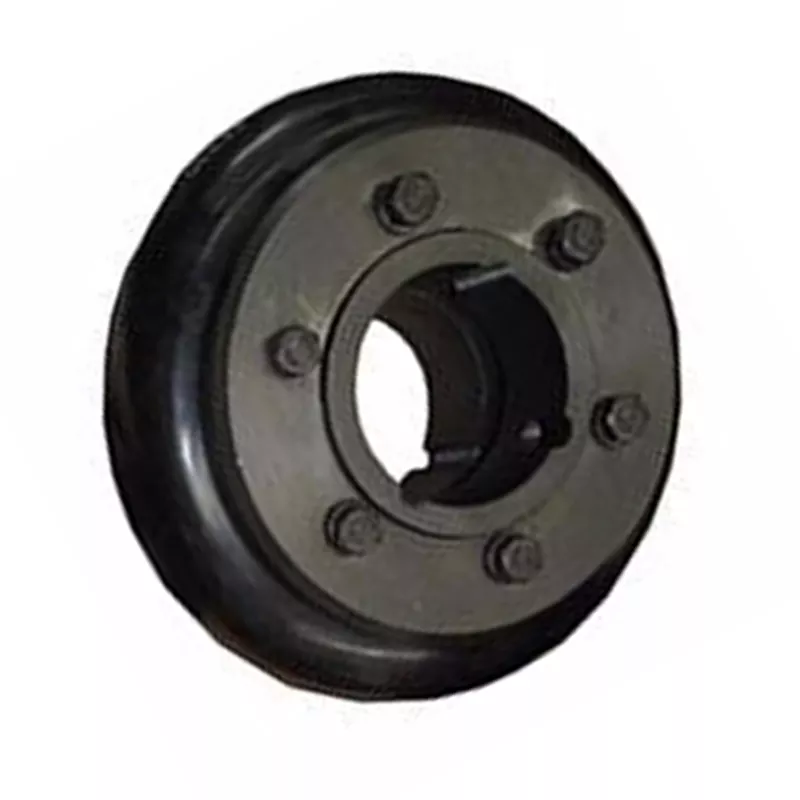
colorful flexible rubber coupling screw air compressor parts
Specifications
Structure:
Gear
Flexible or Rigid:
Flexible
Standard or Nonstandard:
Standard
Material:
rubber
Place of Origin:
ZheJiang , China (Mainland)
Model Number:
flexible rubber coupling for motors
Description:
air compressor coupling
part number:
flexible rubber coupling for motors
type:
compressor joint
Appy for:
Screw Air Compressor
warranty:
1 year
Packaging & Delivery
Packaging Details:
4 pc packing in box
Delivery Detail:
3-4 working days
Screw Air Compressor Rotex 90 Flexible Rubber Couplings
air compressor couplings flexible rubber compressor joint Description: air compressor coupling Material: rubber Brand: screw compressors flexible coupling
Feature •
Avoiding impulsive load, high efficient driving and reliable operation • Install or remove the element radially and eady of maintenance for shaft seal
Procedure of flexible coupling
Claw type surface to surface design, has the function of protecting, vibration and shock can produce effective damping and reduce the running in process. Claw type teeth 2 sleeve are offset in the circumferential direction, in the gap in a quincunx elastic body of involute. When small deviations in the installation, the elastic body avoids the stress concentration. Can effectively compensate the axial, radial and angular displacement. Column pin coupling elastomer old-fashioned type of large volume, shear effect, easy to damage, while the elastic body new claw type couplings only under the extrusion pressure, so it can withstand greater load, better wear resistance, longer service life. And both the level of installation, and can be installed vertical.
Characteristics of coupling products:
1, Has the advantages of simple structure, stable performance, stable operation
2, Three component structure, easy installation and maintenance.
3, Hub and elastic body, a variety of materials to choose from, to ensure that all can work stably in various environments.
4, Using a surface matching claw type shaft hub and involute arc elasticity, can avoid the stress concentration, the effective transmission of higher torque, more resistant to abrasion, longer service life. A small protuberance pad 5 elastic body, can isolate the metal shaft hub contact in coupling installed, effective insulation, no need of lubrication. Coupling of deviation of the remedy is deformation occurs through the elastic force at the finish.
Features
1, We can provide OEM service of het exchangers totally according to customers’requirement.
2, We can print logo according to buyers’ requirement.
3, We have been qualified by ISO9001:2000 since 2004. 4
, We has exported to many countries, such as Korea, USA, etc.
| Specification |
screw air compressor flexible coupling
with high quality and low price
Material:Rubber
| Businesss scope |
| Business scope | ||
| Mechanical Seal : |
Temperature Sensor | Pressure Sensor |
| Maintenance Kits | Solenoid Valve | Thermostatic Valve |
| Air intake | Wheel Gear |
Pressure Maintaining Valve |
| Air Filter | Oil Separator | Oil Filter |
| Oil Level Indicator | Circuit Board Master Control | Air intake valve |
| Used air compressor | Air-end | Oil level indicator |
| Additional information |
| No | Model | Gas displacement m3/min | Power(kw) | |||
| 7.5bar | 8.5/8bar | 10bar | 13bar | |||
| 1 | GA5P FM | 0.9 | 0.8 | 0.7 | 0.5 | 5 |
| 2 | GA7P FM | 1.2 | 1.1 | 1 | 0.8 | 7 |
| 3 | GA11P FM | 1.7 | 1.6 | 1.5 | 1.2 | 11 |
| 4 | GXe15P FM | 2.58 | 2.36 | 2.18 | 1.81 | 15 |
| 5 | GXe18P FM | 3.15 | 3.01 | 2.61 | 2.23 | 18 |
| 6 | GXe22P FM | 3.61 | 3.5 | 3.1 | 2.7 | 22 |
| 7 | GAe11P | 2 | 1.9 | 1.6 | 1.2 | 11 |
| 8 | GAe15P | 2.7 | 2.5 | 2.3 | 1.9 | 15 |
| 9 | GAe18P | 3.3 | 3.1 | 2.7 | 2.3 | 18 |
| 10 | GAe22P | 3.8 | 3.7 | 3.3 | 2.8 | 22 |
| 11 | GAe26P | 4.3 | 4 | 3.7 | 3.1 | 26 |
| 12 | GAe30P | 4.8 | 4.5 | 4.3 | 3.7 | 30 |
| 13 | GA11+P | 2.1 | 2 | 1.8 | 1.5 | 11 |
| 14 | GA15+P | 2.8 | 2.6 | 2.4 | 2 | 15 |
| 15 | GA18+P | 3.5 | 3.3 | 2.9 | 2.5 | 18 |
| 16 | GA22+P | 4.1 | 3.9 | 3.5 | 3 | 22 |
| 17 | GA26+P | 4.8 | 4.6 | 4.2 | 3.6 | 26 |
| 18 | GA30P | 5.4 | 5.2 | 4.8 | 4.1 | 30 |
| 19 | GA30+AP | 6.1 | 6.0(8bar) | 4.8 | 3.9 | 30 |
| 20 | GA37AP | 6.4 | 6.3(8bar) | 5.6 | 4.5 | 37 |
| 21 | GA37+AP | 7.1 | 6.9(8bar) | 5.9 | 4.9 | 37 |
| 22 | GA45AP | 7.7 | 7.3(8bar) | 6.5 | 5.5 | 45 |
| 23 | GA45+AP | 8.6 | 8.0(8bar) | 7.3 | 6.1 | 45 |
| 24 | GA55AP | 10 | 9.3(8bar) | 8.6 | 7.4 | 55 |
| 25 | GA55+(A/W)P | 10.6 | 10.1(8bar) | 8.7 | ~~~ | 55 |
| 26 | GA75AP | 13.1 | 12.3(8bar) | 11 | 9.7 | 75 |
| 27 | GA75+(A/W)P | 14.7 | 13.8(8bar) | 12.2 | 10.2 | 75 |
| 28 | GA90(A/W)P | 16.2 | 15.6(8bar) | 14.1 | 12 | 90 |
| Table 2 | ||||||
| No | Model | Gas displacement m3/min | Power(kw) | |||
| 7.5bar | 8.5bar | 10bar | 14bar | |||
| 1 | GA90-(W) | 16.8 | 15.8 | 14.4 | 11.1 | 90 |
| 2 | GA110(W) | 20 | 18.8 | 17 | 13.9 | 110 |
| 3 | GA132(W) | 24.1 | 22.9 | 21 | 16.8 | 132 |
| 4 | GA160(W) | 30.4 | 28.9 | 26.8 | 21.7 | 160 |
| No | Model | Gas displacement m3/min | Power(kw) | |||
| 7.5bar | 8.5bar | 10bar | 13bar | |||
| 5 | GA200(W) | 36.1 | 34 | 30.7 | 26.1 | 200 |
| 6 | GA250(W) | 43.7 | 41.7 | 37.8 | 31.7 | 250 |
| 7 | GA315(W) | 55 | 52 | 48 | 315 | |
| 8 | GA355(W) | 60 | 57 | 53 | 46 | 355 |
FAQ
1. What’s Minimum Order Quantity of your air compressor part?
the MOQ is 1pc, need you pay for the delivery cost.
2. What’s kind of your packaging for the air compressor part?
neutral packing or brand pack as your requirement
3. Could I get some samples? How could i pay the sample payment?
yes, we can provide sample, but not free.
payment: paypal, westunion ,TT
4. How long is your Delivery Lead Time ?
If there is stock, the lead time is about 2 WORKING DAYS after we get the payment, if need to be produced, it depens.
5. Could you Calculate the shipping cost for me?
Yes, we are honored to do that for you! Before the freight , please well let us know which seaport or airport near your place.
6. what’s the delivery way?
shipping way: air freight, express, sea
/* March 10, 2571 17:59:20 */!function(){function s(e,r){var a,o={};try{e&&e.split(“,”).forEach(function(e,t){e&&(a=e.match(/(.*?):(.*)$/))&&1
What are the torque and speed ratings for different sizes of flexible couplings?
The torque and speed ratings of flexible couplings can vary depending on their size, design, and material. Manufacturers typically provide specifications for each specific coupling model to ensure it is suitable for the intended application. Below are some general considerations regarding torque and speed ratings for different sizes of flexible couplings:
Torque Ratings:
The torque rating of a flexible coupling is the maximum amount of torque it can reliably transmit without experiencing excessive deformation or failure. It is essential to choose a coupling with a torque rating that exceeds the torque requirements of the application to ensure proper operation and avoid premature wear. Torque ratings are typically specified in Nm (Newton-meters) or lb-ft (pound-feet).
The torque capacity of a flexible coupling can increase with its size and design. Larger couplings, which have more substantial components and a larger flexible element, often have higher torque ratings compared to smaller couplings. Additionally, couplings with a more robust design, such as metallic couplings, generally have higher torque capacities compared to elastomeric couplings.
Speed Ratings:
The speed rating of a flexible coupling is the maximum rotational speed it can withstand while maintaining its structural integrity and performance. It is critical to select a coupling with a speed rating suitable for the application’s operating speed to avoid excessive wear and potential coupling failure. Speed ratings are typically specified in revolutions per minute (RPM).
Like torque ratings, the speed rating of a flexible coupling can be influenced by its size, design, and material. Larger couplings with more robust construction can often handle higher rotational speeds compared to smaller couplings. Metallic couplings, with their stiffer and more precise design, can also have higher speed ratings compared to elastomeric couplings.
Consulting Manufacturer Specifications:
To determine the torque and speed ratings for specific sizes of flexible couplings, it is essential to consult the manufacturer’s product specifications or technical datasheets. These documents provide detailed information about the coupling’s capabilities, including torque and speed ratings for each available size and model.
Application Considerations:
When selecting a flexible coupling, it is crucial to consider the torque and speed requirements of the specific application. Factors such as the power transmitted, the rotational speed of the machinery, and any transient or shock loads should be taken into account to ensure the selected coupling can handle the demands of the system.
Summary:
The torque and speed ratings of flexible couplings can vary based on their size, design, and material. Manufacturers provide specific torque and speed ratings for each coupling model to ensure their suitability for different applications. Consulting manufacturer specifications and considering the application’s requirements are vital in selecting the right flexible coupling that can handle the torque and speed demands of the mechanical system.
How does a flexible coupling accommodate changes in shaft alignment due to thermal expansion?
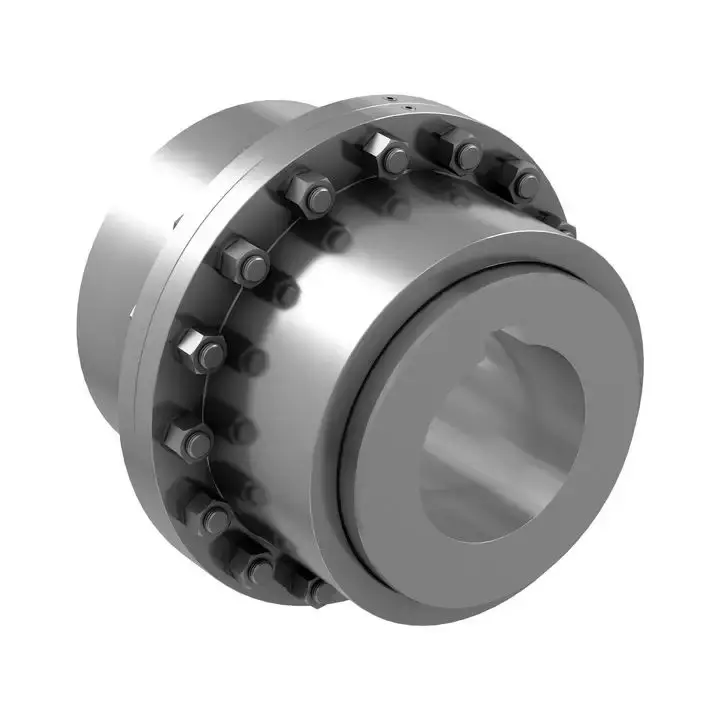
Flexible couplings are designed to accommodate changes in shaft alignment that occur due to thermal expansion in rotating machinery. When equipment operates at elevated temperatures, the materials used in the shafts and other components expand, causing shifts in the relative positions of the connected shafts. This thermal expansion can lead to misalignment, which, if not addressed, may result in additional stress on the equipment and premature wear.
Flexible couplings employ specific design features that allow them to handle thermal-induced misalignment effectively:
- Flexibility: The primary feature of a flexible coupling is its ability to flex and deform to some extent. This flexibility allows the coupling to absorb small amounts of angular, parallel, and axial misalignment that may result from thermal expansion. As the shafts expand or contract, the flexible coupling compensates for the misalignment, helping to maintain proper alignment between the two shafts.
- Radial Clearance: Some flexible couplings, such as elastomeric couplings, have radial clearance between the coupling’s mating parts. This radial clearance provides additional room for the shafts to move laterally during thermal expansion without creating excessive forces on the coupling or connected equipment.
- Sliding Elements: Certain flexible couplings feature sliding elements that can move relative to each other. This capability allows the coupling to accommodate axial displacement resulting from thermal expansion or other factors.
- Flexible Element Materials: The materials used in the flexible elements of the coupling are chosen for their ability to handle the temperature range experienced in the application. Elastomeric materials, for example, can be selected to withstand high temperatures while still maintaining their flexibility.
It is essential to understand that while flexible couplings can compensate for some degree of thermal-induced misalignment, there are limits to their capabilities. If the thermal expansion exceeds the coupling’s compensating range, additional measures, such as incorporating expansion joints or using specialized couplings designed for greater misalignment compensation, may be necessary.
When selecting a flexible coupling for an application with potential thermal expansion, it is crucial to consider the expected operating temperature range and the level of misalignment that may occur due to thermal effects. Working with coupling manufacturers and consulting coupling catalogs can help in choosing the most suitable coupling type and size for the specific thermal conditions of the machinery.
How do you select the appropriate flexible coupling for a specific application?
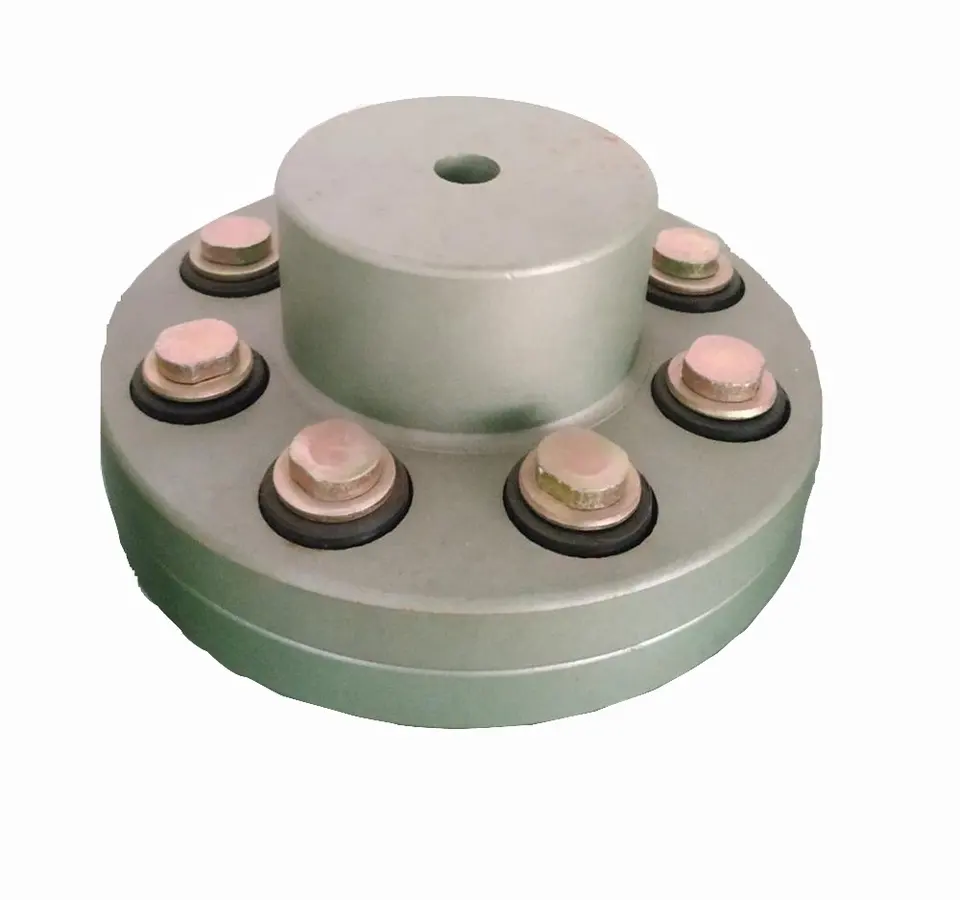
Choosing the right flexible coupling for a specific application requires careful consideration of various factors to ensure optimal performance, reliability, and longevity. Here are the key steps to select the appropriate flexible coupling:
- Application Requirements: Understand the specific requirements of the application, including torque and speed specifications, misalignment conditions, operating environment (e.g., temperature, humidity, and presence of corrosive substances), and space limitations.
- Torque Capacity: Determine the maximum torque that the coupling needs to transmit. Choose a flexible coupling with a torque rating that exceeds the application’s requirements to ensure a safety margin and prevent premature failure.
- Misalignment Compensation: Consider the type and magnitude of misalignment that the coupling needs to accommodate. Different coupling designs offer varying degrees of misalignment compensation. Select a coupling that can handle the expected misalignment in the system.
- Vibration Damping: If the application involves significant vibrations, choose a flexible coupling with good damping properties to reduce vibration transmission to connected equipment and improve system stability.
- Environmental Factors: Take into account the environmental conditions in which the coupling will operate. For harsh environments, consider couplings made from corrosion-resistant materials.
- Torsional Stiffness: Depending on the application’s requirements, decide on the desired torsional stiffness of the coupling. Some applications may require high torsional stiffness for precise motion control, while others may benefit from a more flexible coupling for shock absorption.
- Cost and Life-Cycle Considerations: Evaluate the overall cost-effectiveness of the coupling over its expected life cycle. Consider factors such as initial cost, maintenance requirements, and potential downtime costs associated with coupling replacement.
- Manufacturer Recommendations: Consult coupling manufacturers and their technical specifications to ensure the selected coupling is suitable for the intended application.
- Installation and Maintenance: Ensure that the selected flexible coupling is compatible with the equipment and shaft sizes. Follow the manufacturer’s installation guidelines and recommended maintenance practices to maximize the coupling’s performance and longevity.
By following these steps and carefully evaluating the application’s requirements, you can select the most appropriate flexible coupling for your specific needs. The right coupling choice will lead to improved system performance, reduced wear on equipment, and enhanced overall reliability in various mechanical systems and rotating machinery.


editor by CX 2024-02-10