
Product Description
Cast Iron L type L070 Flexible Coupling Jaw Coupling with Rubber Spider Elastomer
Features
1. Split in half design for simple installation, maintaining free
2. High misalignment capacity
3. Facility protection for a twirl, twist, impact, and abrasion
4. No lubrication for polyurethane flex element
5. Available for bore-to-size hubs and taper lock bushes
6. Low noise
Product Description
|
Size |
Type |
A |
B |
D |
E |
Standard |
Metric bore |
Inch bore |
||
|
bore |
Min |
Max |
Min |
Max |
||||||
| L035 |
1 |
16 |
20.5 |
6.6 |
/ |
3 |
3 |
8 |
1/8″ |
3/8″ |
|
L050 |
1 |
28 |
43.2 |
15.6 |
/ |
6 |
6 |
15 |
3/16″ |
5/8″ |
|
L070 |
1 |
35 |
50.8 |
19 |
/ |
9 |
9 |
19 |
3/16″ |
3/4″ |
|
L075 |
1 |
45 |
54.7 |
21 |
/ |
9 |
9 |
25 |
3/16″ |
1″ |
|
L090 |
1 |
54 |
54.7 |
21 |
/ |
9 |
9 |
28 |
3/16″ |
1 1/8″ |
|
L095 |
1 |
54 |
63.7 |
25.5 |
/ |
9 |
9 |
28 |
3/8″ |
1 1/8″ |
|
L099 |
1 |
64.5 |
72.5 |
27 |
/ |
12 |
12 |
35 |
7/16″ |
1 3/8″ |
|
L100 |
1 |
64.5 |
88.5 |
35 |
/ |
12 |
12 |
35 |
7/16″ |
1 3/8″ |
|
L110 |
1 |
85 |
108 |
43 |
/ |
15 |
15 |
48 |
1/2″ |
1 7/8″ |
|
L150 |
1 |
96 |
115.4 |
45 |
/ |
15 |
15 |
48 |
5/8″ |
1 7/8″ |
|
L190 |
2 |
115 |
133.4 |
54 |
101.6 |
19 |
19 |
55 |
5/8″ |
2 1/4″ |
|
L225 |
2 |
127 |
153.4 |
64 |
108 |
19 |
19 |
65 |
3/4″ |
2 5/8″ |
Related Products
Company Profile
FAQ
Q: How to ship to us?
A: It is available by air, by sea, or by train.
Q: How to pay the money?
A: T/T and L/C are preferred, with different currencies, including USD, EUR, RMB, etc.
Q: How can I know if the product is suitable for me?
A: >1ST confirm drawing and specification >2nd test sample >3rd start mass production.
Q: Can I come to your company to visit?
A: Yes, you are welcome to visit us at any time.
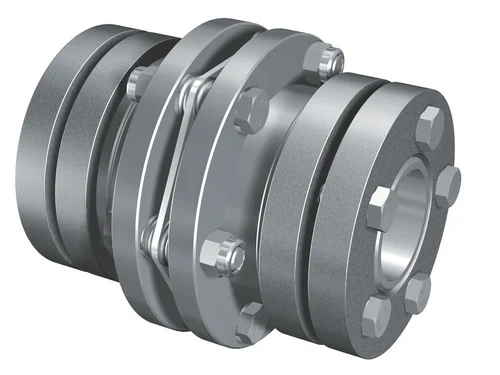
How does a flexible coupling handle electrical insulation between shafts?
Flexible couplings are typically not designed to provide electrical insulation between shafts. In most cases, flexible couplings are used solely for the purpose of transmitting mechanical power from one shaft to another while accommodating misalignment and absorbing shocks and vibrations. They do not offer any electrical isolation or insulation properties.
When electrical insulation is required between two rotating shafts in a system, additional components or specialized couplings are used. For applications where electrical isolation is necessary, insulated couplings or special insulation components can be employed. These types of couplings feature insulating materials, coatings, or designs that prevent electrical current from flowing between the connected shafts.
Insulated couplings can be beneficial in certain applications, such as electric motor drives or systems involving sensitive electronics. They help prevent stray currents, ground loops, and electrical interference that could potentially damage equipment or affect the accuracy of electronic signals. However, it is important to note that not all flexible couplings provide this electrical insulation capability, and users should carefully select couplings that meet the specific electrical isolation requirements of their application.
Summary: Flexible couplings, as standard mechanical components, do not inherently provide electrical insulation between shafts. They are primarily used for mechanical power transmission and misalignment compensation. If electrical insulation is needed between rotating shafts, insulated couplings or specialized components with insulating properties should be chosen to meet the specific requirements of the application.
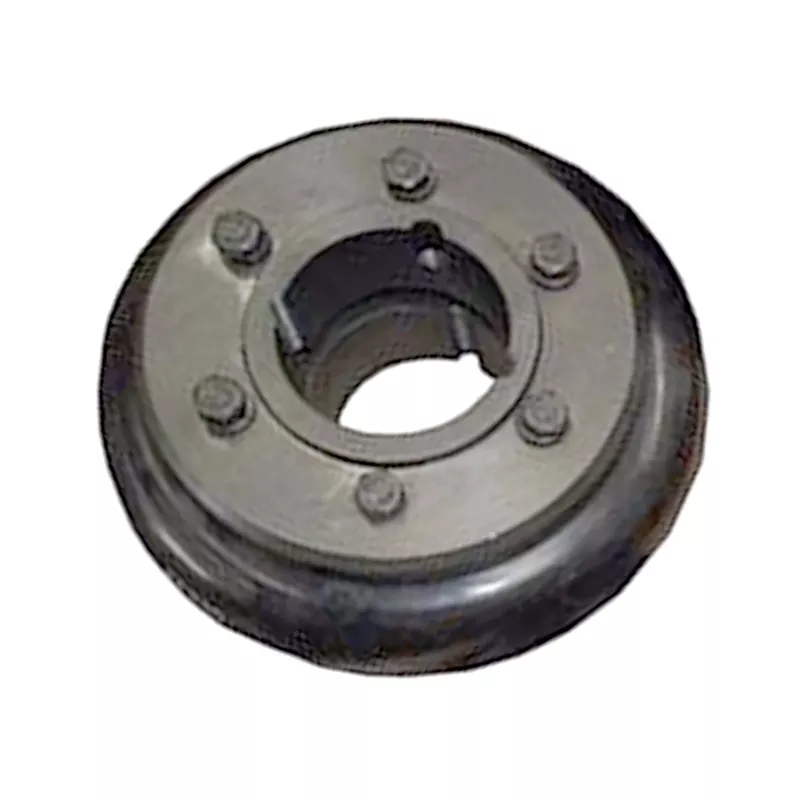
What are the factors influencing the thermal performance of a flexible coupling?
The thermal performance of a flexible coupling can be influenced by several factors, including:
- Material Composition: The material used in the construction of the flexible coupling can impact its thermal performance. Different materials have varying thermal conductivity and heat resistance properties, which can affect how well the coupling dissipates heat generated during operation.
- Operating Speed: The rotational speed of the flexible coupling can influence its thermal behavior. Higher speeds can result in increased friction, leading to more heat generation. Couplings designed for high-speed applications often incorporate features to manage and dissipate heat effectively.
- Power Transmission: The amount of power transmitted through the flexible coupling plays a role in its thermal performance. Higher power levels can lead to increased heat generation, and the coupling must be designed to handle and dissipate this heat without compromising its integrity.
- Environmental Conditions: The ambient temperature and surrounding environment can impact the thermal performance of the flexible coupling. In high-temperature environments, the coupling may need to dissipate heat more efficiently to avoid overheating.
- Lubrication: Proper lubrication is essential for managing friction and heat generation within the coupling. Insufficient or inappropriate lubrication can lead to increased wear and heat buildup.
- Design and Geometry: The design and geometry of the flexible coupling can influence its thermal performance. Some coupling designs incorporate features such as cooling fins, ventilation, or heat sinks to enhance heat dissipation.
- Load Distribution: The distribution of loads across the flexible coupling can affect how heat is generated and dissipated. Proper load distribution helps prevent localized heating and reduces the risk of thermal issues.
Manufacturers consider these factors during the design and selection of flexible couplings to ensure they can handle the thermal demands of specific applications. Proper application and maintenance of the flexible coupling are also essential for optimizing its thermal performance and overall efficiency.
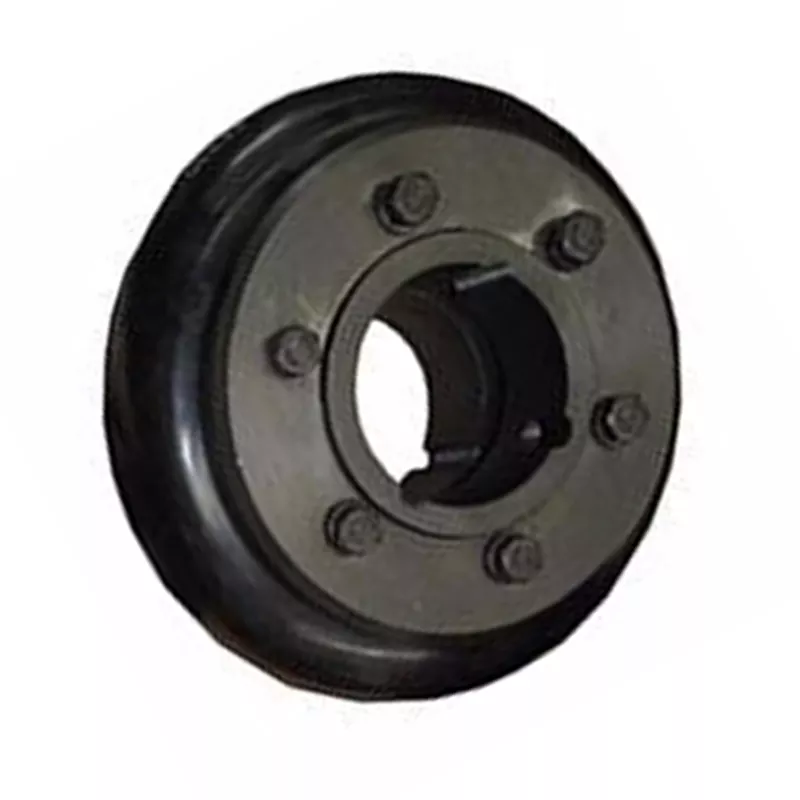
Can flexible couplings be used in both horizontal and vertical shaft arrangements?
Yes, flexible couplings can be used in both horizontal and vertical shaft arrangements. The design of flexible couplings allows them to accommodate misalignment and compensate for angular, parallel, and axial displacements between the shafts, making them suitable for various shaft orientations.
Horizontal Shaft Arrangements:
In horizontal shaft arrangements, where the shafts are parallel to the ground or horizontal plane, flexible couplings are commonly used to connect two rotating shafts. These couplings help transmit torque from one shaft to another while accommodating any misalignment that may occur during operation. Horizontal shaft arrangements are common in applications such as pumps, compressors, conveyors, and industrial machinery.
Vertical Shaft Arrangements:
In vertical shaft arrangements, where the shafts are perpendicular to the ground or vertical plane, flexible couplings are also applicable. Vertical shafts often require couplings that can handle the additional weight and forces resulting from gravity. Flexible couplings designed for vertical applications can support the weight of the rotating equipment while allowing for some axial movement to accommodate thermal expansion or other displacements. Vertical shaft arrangements are commonly found in applications such as pumps, gearboxes, turbines, and some marine propulsion systems.
Considerations for Vertical Shaft Arrangements:
When using flexible couplings in vertical shaft arrangements, there are a few additional considerations to keep in mind:
- Thrust Load: Vertical shafts can generate thrust loads, especially in upward or downward direction. The flexible coupling should be selected based on its capacity to handle both radial and axial loads to accommodate these forces.
- Lubrication: Some vertical couplings may require additional lubrication to ensure smooth operation and reduce wear, particularly if they are exposed to high axial loads or extended vertical shafts.
- Support and Bearing: Proper support and bearing arrangements for the vertical shaft are essential to prevent excessive shaft deflection and ensure the flexible coupling functions correctly.
Overall, flexible couplings are versatile and adaptable to various shaft orientations, providing efficient power transmission and misalignment compensation. Whether in horizontal or vertical arrangements, using the appropriate flexible coupling design and considering the specific application requirements will help ensure reliable and efficient operation.


editor by CX 2023-08-17