
Product Description
Dedicated Couplings Adaptors for Ductile Iron Pipes ISO 2531/EN545 EN 14525, ANSI/AWWA C219
Description
SYI can supply the Dedicated Couplings dedicated Couplings, dedicated to connect the ductile iron pipe (upto DN2200)
SYI Dedicated Couplings DIMENSIONS
|
SYI S. N. |
DN |
pipe O.D. |
O.D. Tolerance |
D2 |
H |
L |
Min. pipe end prepared length |
|
|
|
mm |
|||||||
|
DC40 |
40 |
56 |
+1.0 |
-3.0 |
120 |
102 |
166 |
100 |
|
DC50 |
50 |
66 |
+1.0 |
-3.0 |
126 |
102 |
166 |
100 |
|
DC60 |
60 |
77 |
+1.0 |
-3.0 |
135 |
102 |
166 |
100 |
|
DC65 |
65 |
82 |
+1.0 |
-3.0 |
156 |
102 |
166 |
100 |
|
DC80 |
80 |
98 |
+1.0 |
-3.0 |
184 |
102 |
166 |
100 |
|
DC100 |
100 |
118 |
+1.0 |
-3.0 |
205 |
102 |
166 |
100 |
|
DC125 |
125 |
144 |
+1.0 |
-3.0 |
232 |
102 |
166 |
100 |
|
DC150 |
150 |
170 |
+1.0 |
-3.0 |
264 |
102 |
173 |
100 |
|
DC200 |
200 |
222 |
+1.0 |
-3.5 |
315 |
102 |
173 |
100 |
|
DC250 |
250 |
274 |
+1.0 |
-3.5 |
374 |
102 |
173 |
100 |
|
DC300 |
300 |
326 |
+1.0 |
-3.5 |
426 |
102 |
173 |
100 |
|
DC350 |
350 |
378 |
+1.0 |
-3.5 |
494 |
152 |
254 |
150 |
|
DC400 |
400 |
429 |
+1.0 |
-4.0 |
544 |
152 |
254 |
150 |
|
DC450 |
450 |
480 |
+1.0 |
-4.0 |
595 |
152 |
254 |
150 |
|
DC500 |
500 |
532 |
+1.0 |
-4.0 |
650 |
152 |
254 |
150 |
|
DC600 |
600 |
635 |
+1.0 |
-4.5 |
753 |
152 |
254 |
150 |
|
DC700 |
700 |
738 |
+1.0 |
-4.5 |
858 |
152 |
254 |
150 |
|
DC800 |
800 |
842 |
+1.0 |
-4.5 |
962 |
152 |
254 |
150 |
|
DC900 |
900 |
945 |
+1.0 |
-5.0 |
1070 |
178 |
280 |
150 |
|
DC1000 |
1000 |
1048 |
+1.0 |
-5.0 |
1173 |
178 |
280 |
150 |
|
DC1100 |
1100 |
1152 |
+1.0 |
-6.0 |
1282 |
178 |
280 |
150 |
|
DC1200 |
1200 |
1255 |
+1.0 |
-6.0 |
1385 |
178 |
280 |
150 |
|
DC1400 |
1400 |
1462 |
+1.0 |
-6.0 |
1592 |
178 |
295 |
150 |
|
DC1500 |
1500 |
1565 |
+1.0 |
-6.0 |
1691 |
178 |
295 |
150 |
|
DC1600 |
1600 |
1668 |
+1.0 |
-6.0 |
1798 |
178 |
295 |
150 |
|
DC1800 |
1800 |
1875 |
+1.0 |
-6.0 |
2015 |
254 |
375 |
150/300 |
|
DC2000 |
2000 |
2082 |
+1.0 |
-6.0 |
2222 |
254 |
375 |
150/300 |
|
DC2200 |
2200 |
2288 |
+1.0 |
-6.0 |
2415 |
254 |
375 |
150/300 |
For other sizes not mentioned above, please contact us. We have right to change the data without further notice.
1. Material
BODY: Ductile Iron grade 500-7/450-10 in accordance with ISO 1083 or 70-50-05/65-45-12 with ASTM A536
GLAND: Ductile Iron grade 500-7/450-10 in accordance with ISO 1083 or 70-50-05/65-45-12 with ASTM A536
GASKET: Rubber E.P.D.M./SBR/NBR in accordance with EN 681.1
D-BOLTS AND NUTS: Carbon Steel Grade 8.8 with dacromet coating
2. Working Pressure: 16 Bar or 250 PSI
3. Fluid Temperature: 0°C – 50°C, excluding frost
4. Allowed Angular Deflection: 6°
5. Joint Gap:19mm
6. Coating
|
External Coatings: |
Internal Coatings: |
7.Reference Rules
Designed and tested in accordance with EN14525, ANSI/AWWA C219 and EN545
Package
Packing: Different package CHINAMFG your request,like wood cases&pallets,ply-wood crates&pallets,steel crates&pallets and etc.
Quality Control
Company Profile
SYI has continually invested in better technology and production facilities. More than 4,000 patterns
are ready. We are capable to finish all the production processes from moulding, shot-blasting, machining, coating to packaging. We have over 100,000 m2 foundry land including:
-10,000 m2 of the pattern, sand mixing, polishing, machining, hydraulic pressure, coating, packaging workshops;
-4,000 m2 of 3 green sand moulding workshops and 1 resin sand moulding workshops;
-3,000 m2 of automatic moulding machine line and epoxy coating line
-professional laboratory
-machining shop
-and our own tooling shop
Strict process and operating regulations together with perfect quality assurance system making every production step under control. All the products are subject to tests and inspections including composition analysis, metallographic examination, dimension & surface finish inspection, ring test, tensile test, hardness test, hydrostatic test, CHINAMFG and coating test to be sure that the products meet the requirements of the standards.
Since 2009, CHINAMFG Pipeline has developed from a pipes & fittings seller to a professional project solution provider, including the 1 stop service and solution from pipes, fittings, couplings & flanged adaptors, valves, fire hydrants, to water CHINAMFG and accessories.
SYI products have served 111 countries CHINAMFG up to now!
Most of these customers cooperated with CHINAMFG for more than 20 years!
We value long term cooperation relationship mostly!
Welcome to send us an inquiry for more details and price!!!
P
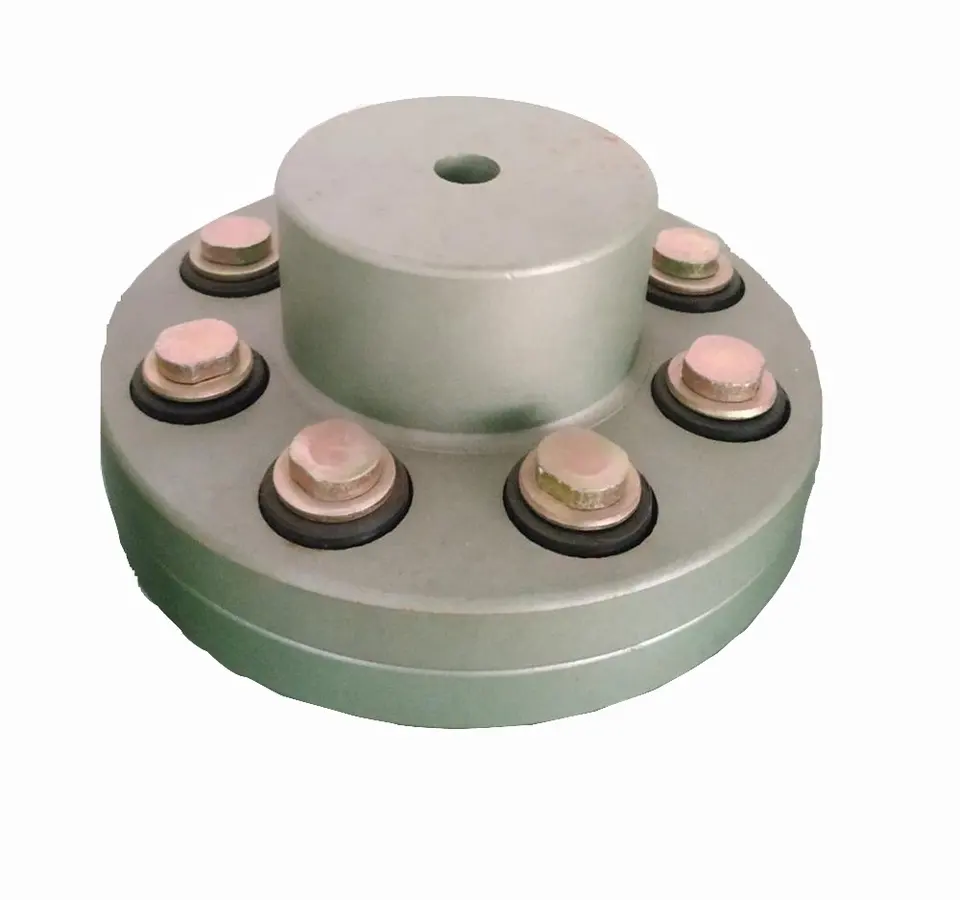
Can flexible couplings be used in heavy-duty applications such as mining and construction?
Yes, flexible couplings can be used in heavy-duty applications such as mining and construction, where the equipment operates under challenging conditions and encounters high loads, vibrations, and misalignments. Flexible couplings offer several advantages that make them suitable for these demanding environments:
- Misalignment Compensation: Heavy-duty equipment in mining and construction may experience misalignment due to the rough terrain, uneven surfaces, or heavy loads. Flexible couplings can handle both angular and parallel misalignment, ensuring smooth power transmission even in these adverse conditions.
- Shock and Vibration Absorption: Mining and construction operations often involve high-impact loads and vibrations. Flexible couplings can dampen and absorb these shocks, protecting the connected components from damage and reducing wear and tear on the equipment.
- Torsional Stiffness: While flexible couplings are designed to accommodate misalignment, they still maintain a certain level of torsional stiffness to transmit torque efficiently. This is crucial in heavy-duty applications, where high torque is required to drive the machinery.
- Corrosion and Contamination Resistance: In mining and construction environments, equipment may be exposed to dust, dirt, water, and chemicals. Flexible couplings made from corrosion-resistant materials can withstand these harsh conditions, ensuring reliable performance and longevity.
- High Torque Transmission: Heavy-duty machinery often requires high torque transmission between the driving and driven components. Flexible couplings are capable of transmitting high torque efficiently, which is essential for the operation of large-scale equipment.
- Reduced Downtime: The robustness and reliability of flexible couplings in heavy-duty applications contribute to reduced downtime. By minimizing the impact of misalignment, shocks, and vibrations, flexible couplings help prevent unexpected breakdowns and maintenance issues.
When selecting a flexible coupling for heavy-duty applications, it’s important to consider the specific requirements of the machinery and the operating conditions. Factors such as the type of equipment, torque and speed requirements, environmental conditions, and expected loads should be taken into account.
Overall, flexible couplings are a versatile solution for power transmission in heavy-duty applications, providing the necessary flexibility, durability, and performance to withstand the challenges posed by the mining and construction industries.
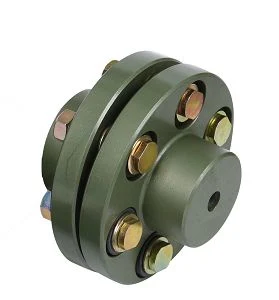
Can flexible couplings accommodate both radial and axial loads simultaneously?
Yes, flexible couplings are designed to accommodate both radial and axial loads simultaneously, making them versatile for various mechanical systems. The ability to handle these loads is one of the key advantages of using flexible couplings in power transmission applications. Here’s how they manage both types of loads:
- Radial Loads: Radial loads act perpendicular to the shaft’s axis and can arise from forces that are not in line with the shaft, such as belt tension or bearing loads. Flexible couplings can handle radial loads due to their flexibility and ability to bend or deform slightly, redistributing the radial forces and minimizing the impact on the connected equipment.
- Axial Loads: Axial loads act along the shaft’s axis and are common in applications with thrust forces or axial movements. Flexible couplings can accommodate axial loads through their axial flexibility, allowing slight axial displacement without transmitting excessive forces to the connected components.
- Angular Misalignment: Besides radial and axial loads, flexible couplings can also handle angular misalignment between the shafts. Angular misalignment occurs when the shafts are not perfectly aligned, and flexible couplings can compensate for this misalignment, reducing wear and stress on the connected machinery.
By accommodating both radial and axial loads, flexible couplings help prevent premature wear, reduce the risk of equipment damage, and contribute to smoother and more efficient power transmission. When selecting a flexible coupling for an application, it is essential to consider the expected radial and axial loads, as well as the required level of misalignment compensation to ensure optimal performance and longevity of the coupling and the connected equipment.
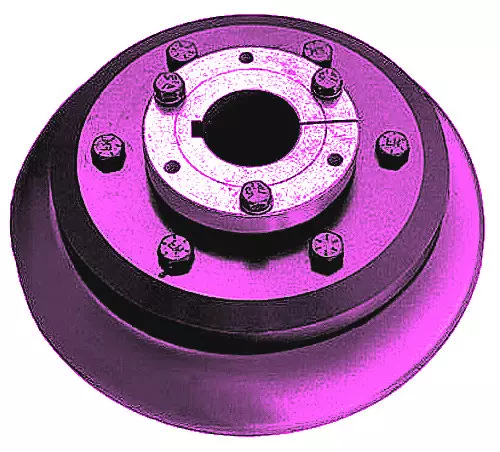
What is a flexible coupling and how does it work?
A flexible coupling is a mechanical device used to connect two shafts while allowing for relative movement between them. It is designed to transmit torque from one shaft to another while compensating for misalignment, vibration, and shock. Flexible couplings are essential components in various rotating machinery and systems, as they help protect the connected equipment and enhance overall performance.
Types of Flexible Couplings:
There are several types of flexible couplings, each with its unique design and characteristics. Some common types include:
- Jaw Couplings: Jaw couplings feature elastomer spiders that fit between two hubs. They can accommodate angular and parallel misalignment while dampening vibrations.
- Disc Couplings: Disc couplings use thin metallic discs to connect the shafts. They are highly flexible and provide excellent misalignment compensation.
- Gear Couplings: Gear couplings use gear teeth to transmit torque. They offer high torque capacity and can handle moderate misalignment.
- Beam Couplings: Beam couplings use a single piece of flexible material, such as a metal beam, to transmit torque while compensating for misalignment.
- Bellows Couplings: Bellows couplings use a bellows-like structure to allow for axial, angular, and parallel misalignment compensation.
- Oldham Couplings: Oldham couplings use three discs, with the middle one having a perpendicular slot to allow for misalignment compensation.
How a Flexible Coupling Works:
The operation of a flexible coupling depends on its specific design, but the general principles are similar. Let’s take the example of a jaw coupling to explain how a flexible coupling works:
- Two shafts are connected to the coupling hubs on either side, with an elastomer spider placed between them.
- When torque is applied to one shaft, it causes the spider to compress and deform slightly, transmitting the torque to the other shaft.
- In case of misalignment between the shafts, the elastomer spider flexes and compensates for the misalignment, ensuring smooth torque transmission without imposing excessive loads on the shafts or connected equipment.
- The elastomer spider also acts as a damping element, absorbing vibrations and shocks during operation, which reduces wear on the equipment and enhances system stability.
Overall, the flexibility and ability to compensate for misalignment are the key features that allow a flexible coupling to function effectively. The choice of a specific flexible coupling type depends on the application’s requirements, such as torque capacity, misalignment compensation, and environmental conditions.


editor by CX 2023-11-21