
Product Description
Pipe Coupling / Universal Joint Coupling / Universal Coupling
1. Application :
* used for pipe connection .
* suit for Ductile Iron Pipe, Cast Iron Pipe, Steel, AC, Plastic pipe
* Working pressure: PN10 / PN16
* Suit for Water, Neutral Liquids and Sewage
2. Features :
* wide range of tolerance
* corrosion resistance
* allow angular deflection of +/- 4°
3. List of Sizes :
| S/N | Size | O.D Range |
| mm | mm | |
| 1 | DN40 | 48-60 |
| 2 | DN50 | 59-73 |
| 3 | DN65 | 72-85 |
| 4 | DN80 | 88-103 |
| 5 | DN100 | 96-116 |
| 6 | 108-120 | |
| 7 | 109-128 | |
| 8 | DN125 | 132-146 |
| 9 | 138-153 | |
| 10 | DN150 | 158-172 |
| 11 | 159-182 | |
| 12 | DN175 | 192-210 |
| 13 | DN200 | 198-225 |
| 14 | 218-235 | |
| 15 | DN250 | 242-262 |
| 16 | 250-267 | |
| 17 | 250-274 | |
| 18 | 272-289 | |
| 19 | DN300 | 315-332 |
| 20 | 322-339 | |
| 21 | DN350 | 340-360 |
| 22 | 351-378 | |
| 23 | 374-391 | |
| 24 | DN400 | 390-410 |
| 25 | 398-430 | |
| 26 | 417-437 | |
| 27 | 425-442 | |
| 28 | DN450 | 450-463 |
| 29 | 455-475 | |
| 30 | 476-500 | |
| 31 | DN500 | 500-508 |
| 32 | 500-533 | |
| 33 | 526-546 | |
| 34 | DN600 | 600-630 |
| 35 | 608-636 | |
| 36 | 630-650 | |
| 37 | DN700 | 710-739 |
| 38 | DN800 | 816-842 |
Note: we accept your specific dimensions which are not included in the above list.
4. Project Cases :
5. Joint Product Series :
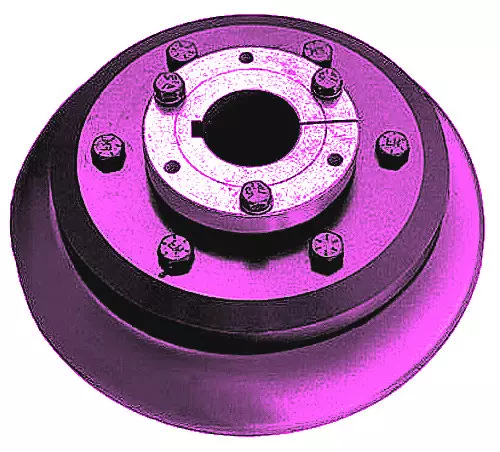
How do flexible couplings handle axial movement in rotating machinery?
Flexible couplings are designed to handle different types of misalignments in rotating machinery, including axial movement or axial misalignment. Axial movement occurs when there is displacement along the axis of rotation, causing one shaft to move closer to or away from the other shaft. Here’s how flexible couplings handle axial movement:
- Sliding Capability: Many flexible couplings, especially those with elastomeric elements or certain designs, can slide along the shafts they connect. This sliding capability allows the coupling to accommodate axial movement without introducing additional stress on the connected components. The elastomeric elements can compress or stretch slightly to absorb the axial displacement.
- Multiple-piece Designs: Some flexible couplings consist of multiple pieces, which allow for axial movement. These designs often have a floating member or a spacer that separates the two shaft-connected components. The floating member can move axially as needed, while still transmitting torque and compensating for other misalignments.
- Double-Cardanic Design: Certain high-performance flexible couplings use a double-cardanic design, allowing for misalignment in multiple directions, including axial movement. This design features two sets of flexible elements that work together to accommodate different misalignments and provide a high degree of flexibility.
It’s important to note that while flexible couplings can handle a certain degree of axial movement, excessive axial misalignment might require a different type of coupling or additional measures to be addressed properly.
During the selection and installation process, it’s essential to consider the application’s axial movement requirements and choose a flexible coupling that can accommodate the expected axial displacement while still providing the desired performance, such as vibration damping, shock absorption, or precision motion control.
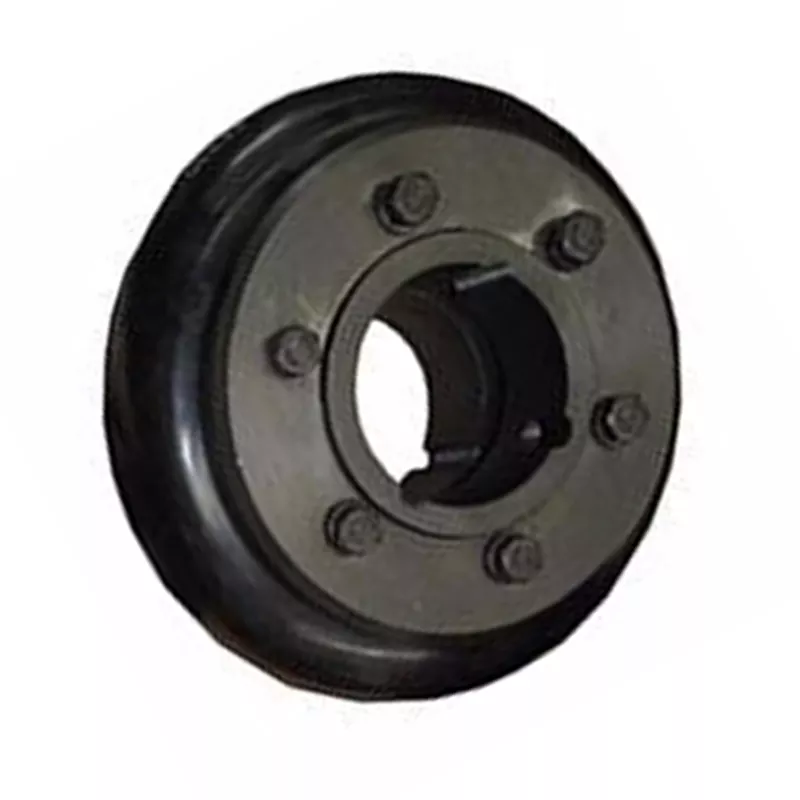
Can flexible couplings be used in pumps, compressors, and fans?
Yes, flexible couplings can be used in pumps, compressors, and fans, and they are commonly employed in these types of rotating machinery. Flexible couplings offer several advantages that make them suitable for such applications:
- Misalignment Compensation: Pumps, compressors, and fans often experience misalignments due to various factors, such as thermal expansion, foundation settling, or component wear. Flexible couplings can accommodate angular, parallel, and axial misalignments, helping to maintain proper alignment between the driving and driven components.
- Vibration Damping: Flexible couplings help dampen vibrations in rotating machinery, which is essential for smooth operation and reduced wear on components. In pumps, compressors, and fans, vibration control is crucial to prevent premature failure and maintain reliable performance.
- Shock Load Absorption: These rotating machines may encounter shock loads during startup or shutdown, especially in reciprocating equipment like reciprocating pumps or compressors. Flexible couplings can absorb and mitigate the impact of such loads, protecting the connected equipment from damage.
- Reduced Maintenance: Flexible couplings with elastomeric elements or other self-lubricating features require minimal maintenance, leading to cost savings and reduced downtime in pumps, compressors, and fans.
- Energy Efficiency: Certain flexible coupling designs, such as beam couplings or certain elastomeric couplings, have low mass and inertia. This characteristic helps improve the energy efficiency of rotating machinery, which is particularly beneficial in large-scale pumps, compressors, and fans used in industrial applications.
- Adaptability: Pumps, compressors, and fans often have varying operating conditions and load profiles. Flexible couplings are adaptable to different operating environments, making them suitable for diverse applications.
In summary, flexible couplings offer several performance-enhancing features that make them well-suited for use in pumps, compressors, and fans. Their ability to accommodate misalignment, dampen vibrations, absorb shocks, and reduce maintenance requirements contributes to improved reliability, efficiency, and longevity of the connected rotating machinery.
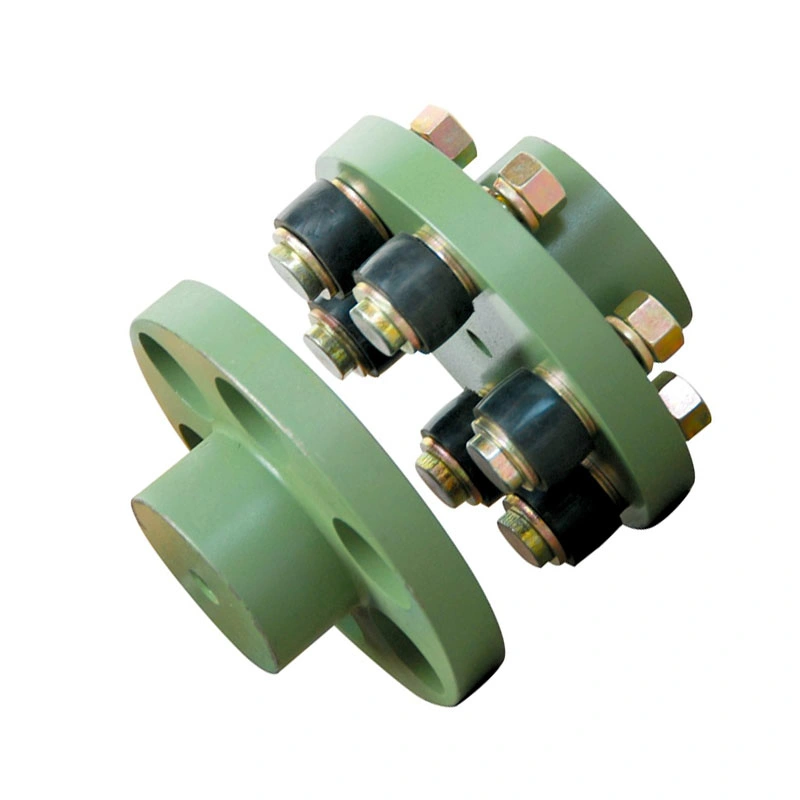
How does a flexible coupling affect the noise and vibration levels in a mechanical system?
A flexible coupling plays a crucial role in controlling noise and vibration levels in a mechanical system. It can significantly impact the overall smoothness and quietness of the system’s operation, contributing to enhanced performance and reduced wear on connected components.
Noise Reduction:
Flexible couplings help reduce noise in a mechanical system through their inherent ability to dampen vibrations. When the shafts of rotating machinery are not perfectly aligned, it can lead to vibrations that are transmitted throughout the system, resulting in noise generation. The elastomeric or flexible element of the coupling acts as a vibration dampener, absorbing and dissipating these vibrations. As a result, the noise levels in the system are reduced, creating a quieter operating environment.
Vibration Damping:
Vibrations in a mechanical system can lead to increased wear and tear on critical components, such as bearings, seals, and gears. Excessive vibrations can also cause resonance and damage to the system over time. Flexible couplings can effectively dampen vibrations by acting as a buffer between the driving and driven shafts. The flexible element absorbs the shock and vibrations, preventing them from propagating to other parts of the system. This vibration damping capability not only reduces noise but also protects the system from potential mechanical failures, extending the lifespan of the equipment.
Alignment Compensation:
Misalignment between shafts is a common cause of vibration and noise in rotating machinery. Flexible couplings excel at compensating for both angular and parallel misalignment. By accommodating misalignment, the coupling reduces the forces acting on the shafts and minimizes the generation of vibrations and noise. Proper alignment through the use of a flexible coupling ensures that the system operates smoothly and quietly.
Effect on Equipment Reliability:
Reducing noise and vibration levels has a positive impact on the reliability of connected equipment. Lower vibrations mean less stress on bearings and other rotating components, leading to extended component life and reduced maintenance requirements. A quieter operating environment can also be essential for certain applications, such as in laboratories or precision manufacturing processes, where excessive noise can interfere with delicate tasks or measurements.
Applications:
Flexible couplings find application in a wide range of industries, such as manufacturing, power generation, material handling, automotive, aerospace, and robotics. They are commonly used in pumps, compressors, fans, conveyors, and other rotating machinery where noise and vibration control are critical for smooth and reliable operation.
Summary:
A flexible coupling’s ability to reduce noise and dampen vibrations makes it an essential component in mechanical systems. By compensating for misalignment and providing vibration dampening properties, the flexible coupling enhances the overall system performance, reduces noise levels, and protects connected equipment from excessive wear and mechanical failures. Choosing the right type of flexible coupling based on the specific application requirements can have a significant impact on noise reduction and vibration control in the mechanical system.


editor by CX 2023-12-07