
Product Description
Product Description
Coupling Deatails
Name: High precision plum blossom
coupling Model: LM-Material: Aviation Aluminum Alloy
Working temperature: -40 ° C ~ 100 ° C
Support customization: Factory direct sales support customization.
Features:
1.Intermediate Elastomer Connection-Absorbs vibration, compensates for radial, angular, and axial 2.misalignment
3.Oil resistance and electrical insulation
4.Clockwise and counterclockwise rotation characteristics are identical-there are 3 different hardness 5.elastomer
6.Fixation by clamping screw.
|
Model parameter |
ΦD |
L |
LF |
LP |
F |
M |
Tightening screw torque |
|
(N.M) |
|||||||
|
GF-14X22 |
14 |
22 |
14.3 |
6.6 |
3.8 |
M 3 |
0.7 |
|
GF-20X25 |
20 |
25 |
16.7 |
8.6 |
4 |
M 3 |
0.7 |
|
GF-20X30 |
20 |
30 |
19.25 |
8.6 |
5.3 |
M 4 |
1.7 |
|
GF-25X30 |
25 |
30 |
20.82 |
11.6 |
5.6 |
M 4 |
1.7 |
|
GF-25X34 |
25 |
34 |
22.82 |
11.6 |
5.6 |
M 4 |
1.7 |
|
GF-30X35 |
30 |
35 |
23 |
11.5 |
5.75 |
M 4 |
1.7 |
|
GF-30X40 |
30 |
40 |
25.6 |
11.5 |
10 |
M 4 |
1.7 |
|
GF-40X50 |
40 |
50 |
32.1 |
14.5 |
10 |
M 5 |
4 |
|
GF-40X55 |
40 |
55 |
34.5 |
14.5 |
10 |
M 5 |
4 |
|
GF-40X66 |
40 |
66 |
40 |
14.5 |
12.75 |
M 5 |
4 |
|
GF-55X49 |
55 |
49 |
32 |
16.1 |
13.5 |
M 6 |
8.4 |
|
GF-55X78 |
55 |
78 |
46.4 |
16.1 |
15.5 |
M 6 |
8.4 |
|
GF-65X80 |
65 |
80 |
48.5 |
17.3 |
18.1 |
M 8 |
10.5 |
|
GF-65X90 |
65 |
90 |
53.5 |
17.3 |
18.1 |
M 8 |
10.5 |
Product Parameters
Detailed Photos
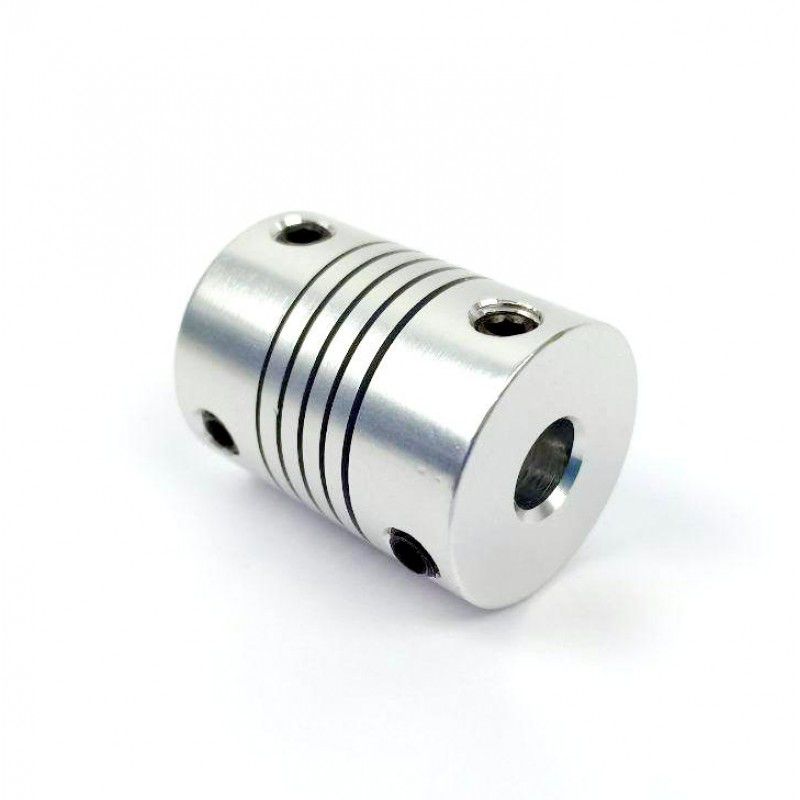
Can Motor Couplings Compensate for Angular, Parallel, and Axial Misalignments?
Yes, motor couplings are designed to compensate for different types of misalignments, including angular, parallel, and axial misalignments. The ability to accommodate misalignment is a key feature of motor couplings, and various coupling types offer different levels of misalignment compensation:
1. Angular Misalignment:
Angular misalignment occurs when the motor and driven equipment shafts are not perfectly aligned in the same plane, causing an angle between them. Motor couplings, especially flexible couplings, can effectively compensate for angular misalignment. Flexible couplings like jaw couplings, beam couplings, and oldham couplings can tolerate angular misalignment to a certain extent while transmitting torque smoothly.
2. Parallel Misalignment:
Parallel misalignment happens when the motor and driven equipment shafts are not perfectly aligned along their axis, leading to offset displacement. Flexible couplings, such as bellows couplings and disc couplings, are well-suited to accommodate parallel misalignment. These couplings can maintain good misalignment tolerance while providing high torsional stiffness for efficient torque transmission.
3. Axial Misalignment:
Axial misalignment occurs when there is a linear offset between the motor and driven equipment shafts along the axis. For some flexible couplings, a limited amount of axial misalignment can be tolerated. However, specific coupling types, such as self-aligning ball bearing couplings, are more suitable for handling higher levels of axial misalignment.
It is important to note that while motor couplings can compensate for misalignment, they have their limits. Excessive misalignment can lead to premature wear, reduced efficiency, and potential coupling failure. Proper alignment during installation and regular maintenance are essential to ensure the coupling’s misalignment compensation remains effective over time.
When selecting a motor coupling, consider the type and amount of misalignment expected in your application. Choose a coupling that offers the required level of misalignment compensation, ensuring smooth power transmission and extending the lifespan of the coupling and connected components.
“`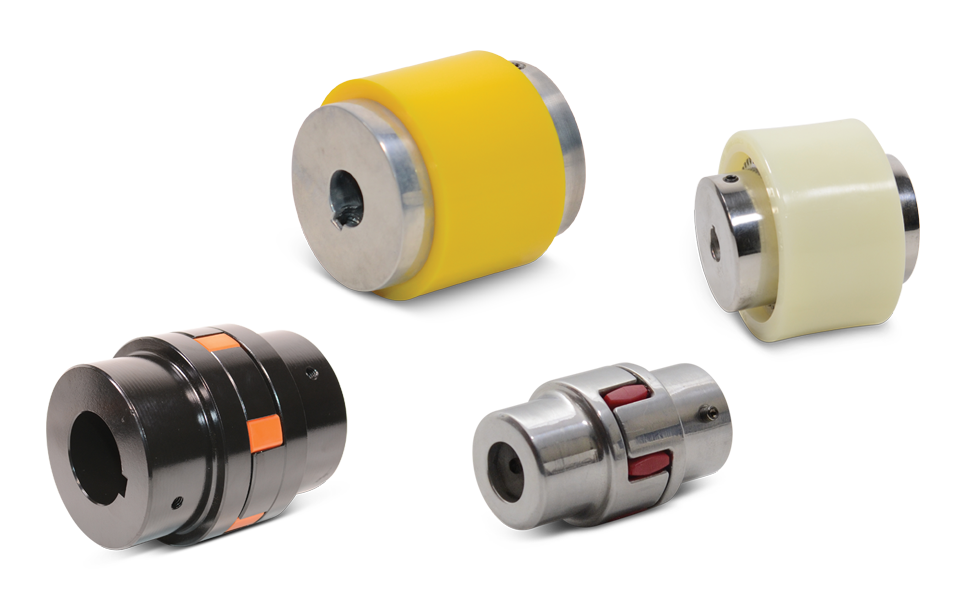
Do Motor Couplings Require Regular Maintenance, and If So, What Does It Involve?
Yes, motor couplings do require regular maintenance to ensure their proper functioning and longevity. Regular maintenance helps identify and address any potential issues before they lead to costly breakdowns or equipment failures. Here’s what regular maintenance of motor couplings typically involves:
1. Visual Inspection:
Perform a visual inspection of the coupling regularly to check for signs of wear, damage, or misalignment. Look for any cracks, corrosion, or deformation in the coupling components.
2. Lubrication:
Some motor couplings may have moving parts or bearings that require lubrication. Follow the manufacturer’s guidelines to apply the appropriate lubricant at recommended intervals.
3. Tightening Fasteners:
Check and tighten the coupling’s fasteners, such as bolts and screws, to ensure they are securely in place. Loose fasteners can lead to misalignment and reduce coupling efficiency.
4. Balancing:
If the motor coupling operates at high speeds, consider periodic balancing to prevent vibrations and ensure smooth operation.
5. Misalignment Check:
Inspect and correct any misalignment between the motor and driven equipment shafts. Misalignment can lead to premature wear and reduced coupling performance.
6. Replacement of Worn Parts:
If any components of the coupling show signs of significant wear or damage, consider replacing them with genuine spare parts recommended by the manufacturer.
7. Environmental Factors:
Consider the environmental conditions in which the coupling operates. If the coupling is exposed to harsh environments, take necessary precautions to protect it from dust, moisture, or chemicals that could cause corrosion.
8. Temperature Monitoring:
For high-temperature applications, monitor the coupling’s temperature regularly. Excessive heat can degrade elastomeric elements or lubricants.
9. Regular System Inspections:
In addition to focusing on the coupling itself, regularly inspect the entire power transmission system, including the motor and driven equipment, to identify any issues that may affect coupling performance.
10. Maintenance Records:
Maintain comprehensive maintenance records, including inspection dates, repair activities, and any replacements made. These records can help with future troubleshooting and provide valuable insights into the coupling’s performance over time.
Regular maintenance of motor couplings is crucial for ensuring safe and efficient operation. It helps prevent unexpected failures, minimizes downtime, and extends the overall lifespan of the coupling and connected components.
“`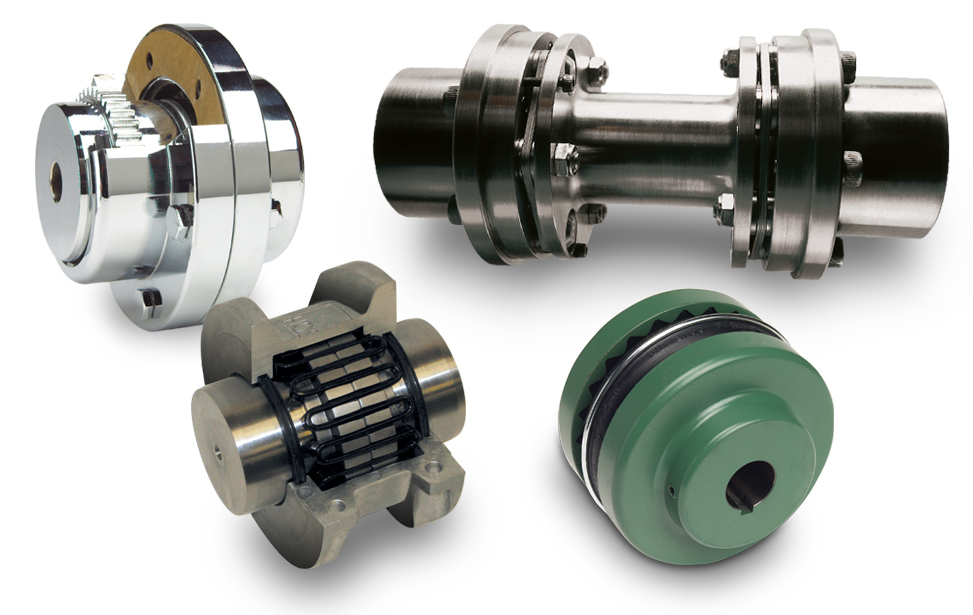
Types of Motor Couplings and Their Applications in Different Industries
Motor couplings come in various types, each designed to meet specific requirements and applications in different industries. Here are some common types of motor couplings and their typical uses:
1. Rigid Couplings:
Rigid couplings provide a solid and inflexible connection between the motor shaft and the driven equipment. They are ideal for applications where precise alignment and torque transmission are critical. Rigid couplings are commonly used in machine tools, robotics, and high-precision industrial equipment.
2. Flexible Couplings:
Flexible couplings are designed to accommodate misalignment between the motor and driven equipment shafts. They can handle angular, parallel, and axial misalignment, reducing stress on bearings and increasing the system’s flexibility. Flexible couplings find applications in pumps, compressors, conveyors, and other machinery where misalignment may occur due to vibration or thermal expansion.
3. Gear Couplings:
Gear couplings use toothed gears to transmit torque between the motor and the driven equipment. They provide high torque capacity and are suitable for heavy-duty applications, such as steel rolling mills, cranes, and marine propulsion systems.
4. Disc Couplings:
Disc couplings use thin metal discs to transmit torque. They offer high torsional stiffness, allowing precise motion control in applications like servo systems, CNC machines, and robotics.
5. Jaw Couplings:
Jaw couplings use elastomeric elements to dampen vibrations and accommodate misalignment. They are commonly used in small electric motors and general-purpose machinery.
6. Bellows Couplings:
Bellows couplings have a flexible accordion-like structure that compensates for misalignment while maintaining torsional rigidity. They are used in vacuum systems, optical equipment, and other high-precision applications.
7. Grid Couplings:
Grid couplings use a flexible grid element to transmit torque and dampen vibrations. They are suitable for applications in pumps, compressors, and conveyor systems where shock loads and misalignment are common.
8. Magnetic Couplings:
Magnetic couplings use magnetic fields to transmit torque between the motor and driven equipment. They are commonly used in applications requiring hermetic sealing, such as pumps and mixers handling hazardous or corrosive fluids.
Each type of motor coupling offers unique advantages and is chosen based on the specific needs of the industry and the application. Proper selection and installation of the right coupling type enhance efficiency, reliability, and safety in motor-driven systems across various industries.
“`

editor by CX 2023-09-01