
Product Description
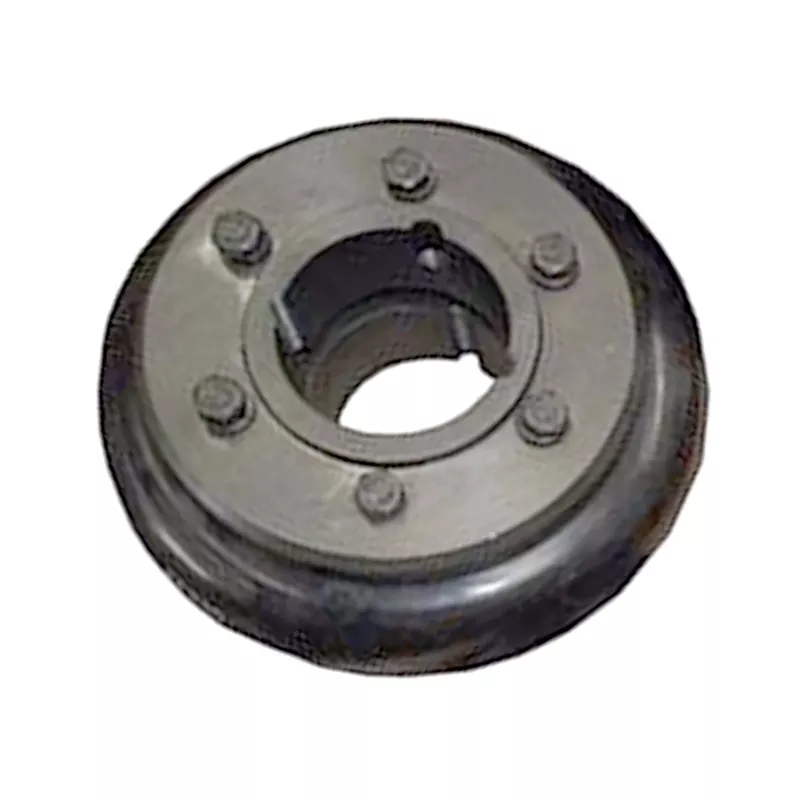
LLB Type Tyre Coupling
The LLB Flexible Tyre Coupling is a kind of high elastic coupling, with a good damping buffer and superior offset compensation performance.
The working temperature of 20~80 degrees Celsius, transmitting torque 10~20000NM, suitable for damp, dust, shock, vibration, reversing the changeable and frequent starting working conditions, and convenient assembly and disassembly, no lubrication, durable and reliable. Non-standard couplings are made in accordance with special needs. In overloading work and half coupling, there will be no malignant accidents.
LLB Type Tyre Coupling Main Dimension And Parameter
| Type | Main dimension | Number of screws Md×L |
Shaft hole diameter d dz |
Shaft hole length | Allowable Torque |
Allowable Speed |
Rotary inertia | Mass | ||
| D | D1 | H | L | Tn | (n) | kg·m2 | kg | |||
| Y J1 Z1 | N·m | r/min | ||||||||
| LLB1 | 60 | 20 | 26 | 12-M4×12 | 6-11 | 16-25 | 10 | 5000 | 0.0003 | 0.4 |
| LLB2 | 100 | 36 | 32/37 | 12-M6×18 | 10-19 | 25-42 | 50 | 5000 | 0.0035 | 1.5 |
| LLB3 | 120 | 44 | 39 | 12-M8×20 | 16-24 | 30-52 | 100 | 4000 | 0.01 | 2.2 |
| LLB4 | 140 | 50 | 45 | 12-M10×20 | 22-35 | 38-82 | 160 | 3150 | 0.571 | 3.1 |
| LLB5 | 160 | 60 | 51 | 12-M10×22 | 25-38 | 44-82 | 224 | 2800 | 0.031 | 5 |
| LLB6 | 185 | 70 | 58 | 12-M12×25 | 30-45 | 60-112 | 315 | 2500 | 0.07 | 8.1 |
| LLB7 | 220 | 85 | 68 | 12-M12×28 | 35-50 | 60-112 | 500 | 2000 | 0.15 | 13 |
| LLB8 | 265 | 110 | 82 | 12-M12×32 | 40-56 | 84-142 | 800 | 1600 | 0.30 | 22 |
| LLB9 | 310 | 120 | 106 | 12-M16×40 | 45-71 | 84-142 | 1250 | 1250 | 0.75 | 35 |
| LLB10 | 400 | 150 | 124 | 12-M20×50 | 60-85 | 107-172 | 1600 | 1800 | 2.2 | 69 |
| LLB11 | 445 | 190 | 140 | 12-M20×56 | 80-120 | 132-212 | 2250 | 1600 | 4.4 | 110 |
| LLB12 | 550 | 238 | 172 | 16-M24×71 | 100-150 | 167-252 | 5000 | 1200 | 14 | 190 |
| LLB13 | 700 | 318 | 220 | 24-M24×71 | 130-100 | 202-352 | 1000 | 1000 | 38 | 340 |
Note:Z1 type shaft hole can not be used at both ends of half couplings.
Product Show
♦Other Products List
| Transmission Machinery Parts Name |
Model |
| Universal Coupling | WS, WSD, WSP |
| Cardan Shaft | SWC,SWP,SWZ |
| Tooth Coupling | CL,CLZ,GCLD,GIICL, GICL,NGCL,GGCL,GCLK |
| Disc Coupling | JMI, JMIJ, JMII, JMIIJ |
| High Flexible Coupling | LM |
| Chain Coupling | GL |
| Jaw Coupling | LT |
| Grid Coupling | JS |
♦Our Company
HangZhou CHINAMFG Machinery Manufacturing Co., Ltd. is a high-tech enterprise specializing in the design and manufacture of various types of coupling. There are 86 employees in our company, including 2 senior engineers and no fewer than 20 mechanical design and manufacture, heat treatment, welding, and other professionals.
Advanced and reasonable process, complete detection means. Our company actively introduces foreign advanced technology and equipment, on the basis of the condition, we make full use of the advantage and do more research and innovation. Strict to high quality and operate strictly in accordance with the ISO9000 quality certification system standard mode.
Our company supplies different kinds of products. High quality and reasonable price. We stick to the principle of “quality first, service first, continuous improvement and innovation to meet the customers” for the management and “zero defect, zero complaints” as the quality objective.
♦Our Services
1. Design Services
Our design team has experience in Cardan shafts relating to product design and development. If you have any needs for your new product or wish to make further improvements, we are here to offer our support.
2. Product Services
raw materials → Cutting → Forging →Rough machining →Shot blasting →Heat treatment →Testing →Fashioning →Cleaning→ Assembly→Packing→Shipping
3. Samples Procedure
We could develop the sample according to your requirement and amend the sample constantly to meet your need.
4. Research & Development
We usually research the new needs of the market and develop new models when there are new cars in the market.
5. Quality Control
Every step should be a particular test by Professional Staff according to the standard of ISO9001 and TS16949.
♦FAQ
Q 1: Are you a trading company or a manufacturer?
A: We are a professional manufacturer specializing in manufacturing
various series of couplings.
Q 2:Can you do OEM?
Yes, we can. We can do OEM & ODM for all customers with customized PDF or AI format artworks.
Q 3:How long is your delivery time?
Generally, it is 20-30 days if the goods are not in stock. It is according to quantity.
Q 4: Do you provide samples? Is it free or extra?
Yes, we could offer the sample but not for free. Actually, we have an excellent price principle, when you make the bulk order the cost of the sample will be deducted.
Q 5: How long is your warranty?
A: Our Warranty is 12 months under normal circumstances.
Q 6: What is the MOQ?
A: Usually our MOQ is 1pcs.
Q 7: Do you have inspection procedures for coupling?
A:100% self-inspection before packing.
Q 8: Can I have a visit to your factory before the order?
A: Sure, welcome to visit our factory.
Q 9: What’s your payment?
A:1) T/T.
♦Contact Us
Web: huadingcoupling
Add: No.11 HangZhou Road,Chengnan park,HangZhou City,ZheJiang Province,China /* March 10, 2571 17:59:20 */!function(){function s(e,r){var a,o={};try{e&&e.split(“,”).forEach(function(e,t){e&&(a=e.match(/(.*?):(.*)$/))&&1
What are the temperature and environmental limitations of flexible couplings?
Flexible couplings are designed to operate within certain temperature and environmental limitations to ensure optimal performance and longevity. The specific limitations may vary depending on the type and material of the coupling. Here are the general considerations:
- Temperature Range: The temperature range in which a flexible coupling can operate is crucial. High temperatures can affect the material properties, leading to reduced flexibility and potential failure. Low temperatures can cause the material to become brittle and lose its ability to accommodate misalignment. It’s essential to choose a coupling suitable for the intended temperature range of the application.
- Corrosive Environments: In environments with corrosive substances, such as acids, chemicals, or saltwater, it is essential to select a flexible coupling made of materials that are resistant to corrosion. Stainless steel and certain polymers are commonly used in such environments to prevent degradation and maintain the coupling’s integrity.
- Hygienic Environments: For applications in food processing, pharmaceuticals, or cleanrooms, hygienic design is critical. Flexible couplings used in these environments should be easy to clean, made of materials that are non-toxic and resistant to contamination, and free from crevices or pockets where debris can accumulate.
- Explosive or Hazardous Atmospheres: In environments where explosive or hazardous gases, vapors, or dust are present, flexible couplings with anti-static properties or explosion-proof certifications may be necessary to prevent the risk of ignition and ensure safety.
- Outdoor Applications: For outdoor installations, flexible couplings should be able to withstand exposure to weather conditions, UV radiation, and temperature fluctuations. Couplings with weather-resistant properties are suitable for such applications.
- High-Speed Applications: In high-speed applications, the centrifugal forces on the flexible coupling increase with rotational speed. Couplings designed for high-speed applications should be balanced to minimize vibrations and ensure smooth operation.
- Shock and Impact Loads: Flexible couplings used in applications with significant shock or impact loads should have the ability to dampen and absorb these forces to protect connected equipment from damage.
- Continuous vs. Intermittent Duty: Some flexible couplings are designed for continuous-duty applications, while others are suitable for intermittent duty or start-stop operations. The coupling’s design and material should match the specific duty cycle requirements.
It is essential to consult with the coupling manufacturer or supplier to understand the temperature and environmental limitations of a specific coupling model. Proper selection and application of flexible couplings within their defined limitations contribute to reliable and efficient performance in various industrial and mechanical systems.
How does a flexible coupling handle alignment issues in long-distance shaft connections?
In long-distance shaft connections, it is common to encounter alignment issues due to factors such as thermal expansion, foundation settlement, or machinery shifts. Flexible couplings play a crucial role in handling these alignment issues and ensuring efficient power transmission. Here’s how they achieve this:
- Misalignment Compensation: Flexible couplings are designed to accommodate both angular and parallel misalignments between shafts. When the shafts are not perfectly aligned, the flexibility of the coupling allows it to bend or flex, reducing the transmission of misalignment forces to connected equipment.
- Reduced Stress on Equipment: By absorbing and compensating for misalignment, flexible couplings reduce the stress and loads imposed on connected machinery. This feature is particularly important in long-distance shaft connections, where misalignment can be more pronounced.
- Torsional Flexibility: In addition to angular and parallel misalignments, long-distance shaft connections may also experience torsional misalignment. Flexible couplings can handle torsional flexibility, allowing smooth torque transmission even if the connected shafts have slightly different rotational speeds.
- Vibration Damping: Long-distance shaft connections can be susceptible to vibrations due to the extended span and potential resonance. Flexible couplings help dampen these vibrations, protecting the connected equipment from excessive wear and fatigue.
- Resilience to Shock Loads: Long-distance shaft connections in industrial settings may experience shock loads due to sudden starts, stops, or equipment malfunctions. Flexible couplings can absorb and dissipate some of these shock loads, safeguarding the connected components.
- Longevity: By mitigating the effects of misalignment, vibrations, and shock loads, flexible couplings contribute to the longevity of the connected equipment and reduce maintenance and replacement costs over time.
When selecting a flexible coupling for long-distance shaft connections, it is essential to consider factors such as the degree of misalignment, torque requirements, operating conditions, and the environment in which the coupling will be used. Regular inspection and maintenance of the flexible coupling can further enhance its performance and ensure reliable operation in long-distance shaft connections.
What are the maintenance requirements for flexible couplings?
Maintenance of flexible couplings is essential to ensure their reliable and efficient performance over their service life. Proper maintenance helps prevent premature wear, reduces the risk of unexpected failures, and extends the lifespan of the couplings. Here are some key maintenance requirements for flexible couplings:
- Regular Inspection: Perform regular visual inspections of the flexible couplings to check for signs of wear, damage, or misalignment. Look for cracks, tears, or any other visible issues in the coupling components.
- Lubrication: Some flexible couplings, especially those with moving parts or sliding surfaces, may require periodic lubrication. Follow the manufacturer’s recommendations regarding the type and frequency of lubrication to ensure smooth operation.
- Alignment Checks: Misalignment is a common cause of coupling failure. Regularly check the alignment of the connected shafts and adjust as necessary. Proper alignment reduces stress on the coupling and improves power transmission efficiency.
- Torque Monitoring: Monitoring the torque transmitted through the coupling can help detect any abnormal or excessive loads. If the coupling is subjected to loads beyond its rated capacity, it may lead to premature failure.
- Environmental Protection: If the couplings are exposed to harsh environmental conditions, take measures to protect them from dust, dirt, moisture, and corrosive substances. Consider using protective covers or seals to shield the couplings from potential contaminants.
- Temperature Considerations: Ensure that the operating temperature of the flexible coupling is within its designed range. Excessive heat can accelerate wear, while extremely low temperatures may affect the flexibility of certain coupling materials.
- Replace Worn or Damaged Parts: If any components of the flexible coupling show signs of wear or damage, replace them promptly with genuine replacement parts from the manufacturer.
- Manufacturer’s Guidelines: Follow the maintenance guidelines provided by the coupling manufacturer. They often include specific maintenance intervals and procedures tailored to the coupling’s design and materials.
- Training and Expertise: Ensure that maintenance personnel have the necessary training and expertise to inspect and maintain the flexible couplings properly. Improper maintenance practices can lead to further issues and compromise the coupling’s performance.
By adhering to these maintenance requirements, you can maximize the service life of the flexible couplings and minimize the risk of unexpected downtime or costly repairs. Regular maintenance helps maintain the efficiency and reliability of the coupling in various industrial, automotive, and machinery applications.


editor by CX 2024-02-13