
Product Description
Newest High-Speed Resilient Rubber Tyre Coupling
The LLB Flexible Tyre Coupling is a kind of high elastic coupling, with good damping buffer and superior offset compensation performance.
The working temperature of 20~80 degrees Celsius, transmitting torque 10~20000NM, suitable for damp, dust, shock, vibration, reversing the changeable and frequent starting working conditions, and convenient assembly and disassembly, no lubrication, durable and reliable. Non standard couplings are made in accordance with special needs. In overloading work and half coupling, there will be no malignant accidents.
Advantages:
- Excellent absorbency;
- Disassembly;
- No lubrication;
- Easy maintenance;
- Long lasting;
LLB Type Tyre Coupling Main Dimension And Parameter
| Type | Main dimension | Number of screws Md×L |
Shaft hole diameter d dz |
Shaft hole length | Allowable Torque |
Allowable Speed |
Rotary inertia | Mass | ||
| D | D1 | H | L | Tn | (n) | kg·m2 | kg | |||
| Y J1 Z1 | N·m | r/min | ||||||||
| LLB1 | 60 | 20 | 26 | 12-M4×12 | 6-11 | 16-25 | 10 | 5000 | 0.0003 | 0.4 |
| LLB2 | 100 | 36 | 32/37 | 12-M6×18 | 10-19 | 25-42 | 50 | 5000 | 0.0035 | 1.5 |
| LLB3 | 120 | 44 | 39 | 12-M8×20 | 16-24 | 30-52 | 100 | 4000 | 0.01 | 2.2 |
| LLB4 | 140 | 50 | 45 | 12-M10×20 | 22-35 | 38-82 | 160 | 3150 | 0.571 | 3.1 |
| LLB5 | 160 | 60 | 51 | 12-M10×22 | 25-38 | 44-82 | 224 | 2800 | 0.031 | 5 |
| LLB6 | 185 | 70 | 58 | 12-M12×25 | 30-45 | 60-112 | 315 | 2500 | 0.07 | 8.1 |
| LLB7 | 220 | 85 | 68 | 12-M12×28 | 35-50 | 60-112 | 500 | 2000 | 0.15 | 13 |
| LLB8 | 265 | 110 | 82 | 12-M12×32 | 40-56 | 84-142 | 800 | 1600 | 0.30 | 22 |
| LLB9 | 310 | 120 | 106 | 12-M16×40 | 45-71 | 84-142 | 1250 | 1250 | 0.75 | 35 |
| LLB10 | 400 | 150 | 124 | 12-M20×50 | 60-85 | 107-172 | 1600 | 1800 | 2.2 | 69 |
| LLB11 | 445 | 190 | 140 | 12-M20×56 | 80-120 | 132-212 | 2250 | 1600 | 4.4 | 110 |
| LLB12 | 550 | 238 | 172 | 16-M24×71 | 100-150 | 167-252 | 5000 | 1200 | 14 | 190 |
| LLB13 | 700 | 318 | 220 | 24-M24×71 | 130-100 | 202-352 | 1000 | 1000 | 38 | 340 |
Note:Z1 type shaft hole can not be used at both ends of half couplings.
Product Show:
Our Services:
1. Design Services
Our design team has experience in tire coupling relating to product design and development. If you have any needs for your new product or wish to make further improvements, we are here to offer our support.
2. Product Services
Raw materials → Cutting → Forging →Rough machining →Shot blasting →Heat treatment →Testing →Fashioning →Cleaning→ Assembly→Packing→Shipping
3. Samples Procedure
We could develop the sample according to your requirement and amend the sample constantly to meet your need.
4. Research & Development
We usually research the new needs of the market and develop new models when there are new cars in the market.
5. Quality Control
Every step should be a special test by Professional Staff according to the standard of ISO9001 and TS16949.
FAQ
Q 1: Are you a trading company or a manufacturer?
A: We are a professional manufacturer specializing in manufacturing
various series of cardan shafts.
Q 2:Can you do OEM?
Yes, we can. We can do OEM & ODM for all the customers with customized artworks in PDF or AI format.
Q 3:How long is your delivery time?
Generally, it is 20-30 days if the goods are not in stock. It is according to quantity.
Q 4: Do you provide samples? Is it free or extra?
Yes, we could offer the sample but not for free. Actually, we have a very good price principle, when you make the bulk order the cost of the sample will be deducted.
Q 5: How long is your warranty?
A: Our Warranty is 12 months under normal circumstances.
Q 6: What is the MOQ?
A: Usually our MOQ is 1pcs.
Q 7: Do you have inspection procedures for coupling?
A:100% self-inspection before packing.
Q 8: Can I have a visit to your factory before the order?
A: Sure, welcome to visit our factory.
Q 9: What’s your payment?
A:1) T/T.
♦Contact Us
Web: huadingcoupling
Add: No.11 HangZhou Road,Chengnan park,HangZhou City,ZheJiang Province,China /* March 10, 2571 17:59:20 */!function(){function s(e,r){var a,o={};try{e&&e.split(“,”).forEach(function(e,t){e&&(a=e.match(/(.*?):(.*)$/))&&1
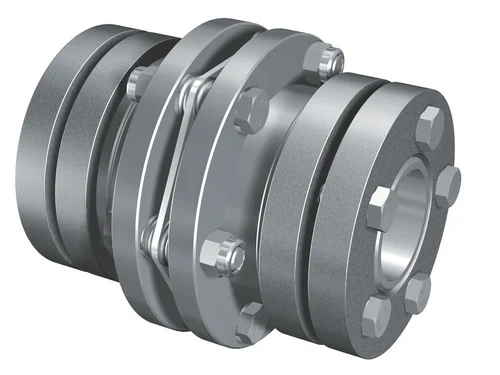
What are the common installation mistakes to avoid when using flexible couplings?
Proper installation is crucial for the reliable and efficient performance of flexible couplings. Here are some common installation mistakes to avoid:
- Incorrect Alignment: One of the most critical installation errors is improper alignment of the driving and driven shafts. Misalignment can lead to premature wear, increased vibration, and reduced power transmission efficiency. It is essential to align the shafts within the specified tolerances provided by the coupling manufacturer.
- Over-Tightening: Applying excessive torque to the coupling’s fasteners during installation can cause damage to the flexible elements and decrease their ability to accommodate misalignment. It is essential to follow the recommended torque values provided by the coupling manufacturer to ensure proper clamping without over-tightening.
- Improper Lubrication: Some flexible couplings may require lubrication of their flexible elements or moving parts. Failure to lubricate as recommended can lead to increased friction, wear, and reduced service life of the coupling.
- Using Damaged Couplings: Before installation, it is crucial to inspect the flexible coupling for any signs of damage or defects. Using a damaged coupling can lead to premature failure and potential safety hazards. If any damage is detected, the coupling should be replaced with a new one.
- Wrong Coupling Selection: Selecting the wrong type or size of the coupling for the application can result in inadequate performance, premature wear, and possible coupling failure. It’s essential to consider factors such as torque requirements, speed, misalignment compensation, and environmental conditions when choosing the appropriate coupling.
- Ignoring Operating Conditions: Failure to consider the specific operating conditions, such as temperature, humidity, and exposure to corrosive substances, can lead to accelerated wear and reduced coupling lifespan. Choosing a coupling that is compatible with the operating environment is essential.
- Ignoring Manufacturer Guidelines: Each flexible coupling comes with specific installation guidelines provided by the manufacturer. Ignoring these guidelines can lead to suboptimal performance and potential safety issues. It is crucial to carefully follow the manufacturer’s instructions during installation.
By avoiding these common installation mistakes and following best practices, the reliability, efficiency, and service life of flexible couplings can be maximized, leading to improved performance of the mechanical system as a whole.
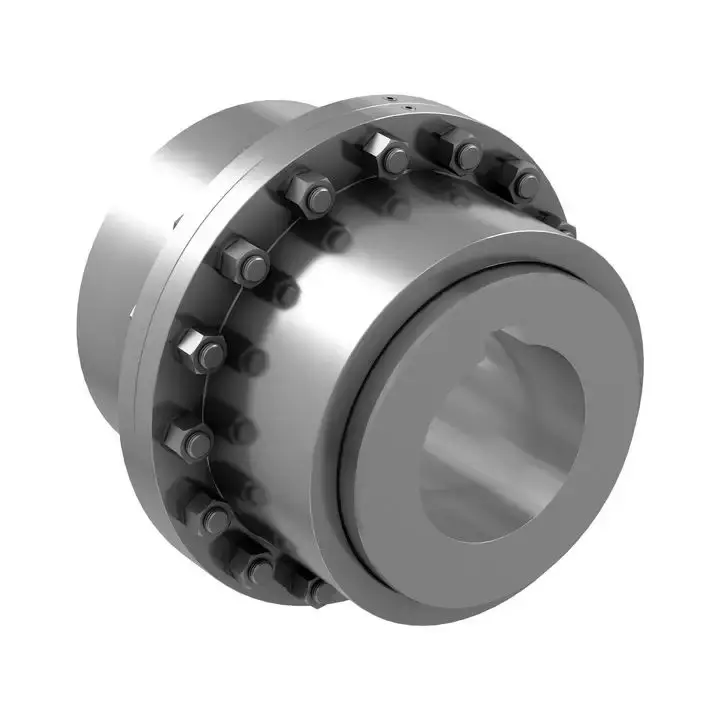
How does a flexible coupling accommodate changes in shaft alignment due to thermal expansion?
Flexible couplings are designed to accommodate changes in shaft alignment that occur due to thermal expansion in rotating machinery. When equipment operates at elevated temperatures, the materials used in the shafts and other components expand, causing shifts in the relative positions of the connected shafts. This thermal expansion can lead to misalignment, which, if not addressed, may result in additional stress on the equipment and premature wear.
Flexible couplings employ specific design features that allow them to handle thermal-induced misalignment effectively:
- Flexibility: The primary feature of a flexible coupling is its ability to flex and deform to some extent. This flexibility allows the coupling to absorb small amounts of angular, parallel, and axial misalignment that may result from thermal expansion. As the shafts expand or contract, the flexible coupling compensates for the misalignment, helping to maintain proper alignment between the two shafts.
- Radial Clearance: Some flexible couplings, such as elastomeric couplings, have radial clearance between the coupling’s mating parts. This radial clearance provides additional room for the shafts to move laterally during thermal expansion without creating excessive forces on the coupling or connected equipment.
- Sliding Elements: Certain flexible couplings feature sliding elements that can move relative to each other. This capability allows the coupling to accommodate axial displacement resulting from thermal expansion or other factors.
- Flexible Element Materials: The materials used in the flexible elements of the coupling are chosen for their ability to handle the temperature range experienced in the application. Elastomeric materials, for example, can be selected to withstand high temperatures while still maintaining their flexibility.
It is essential to understand that while flexible couplings can compensate for some degree of thermal-induced misalignment, there are limits to their capabilities. If the thermal expansion exceeds the coupling’s compensating range, additional measures, such as incorporating expansion joints or using specialized couplings designed for greater misalignment compensation, may be necessary.
When selecting a flexible coupling for an application with potential thermal expansion, it is crucial to consider the expected operating temperature range and the level of misalignment that may occur due to thermal effects. Working with coupling manufacturers and consulting coupling catalogs can help in choosing the most suitable coupling type and size for the specific thermal conditions of the machinery.
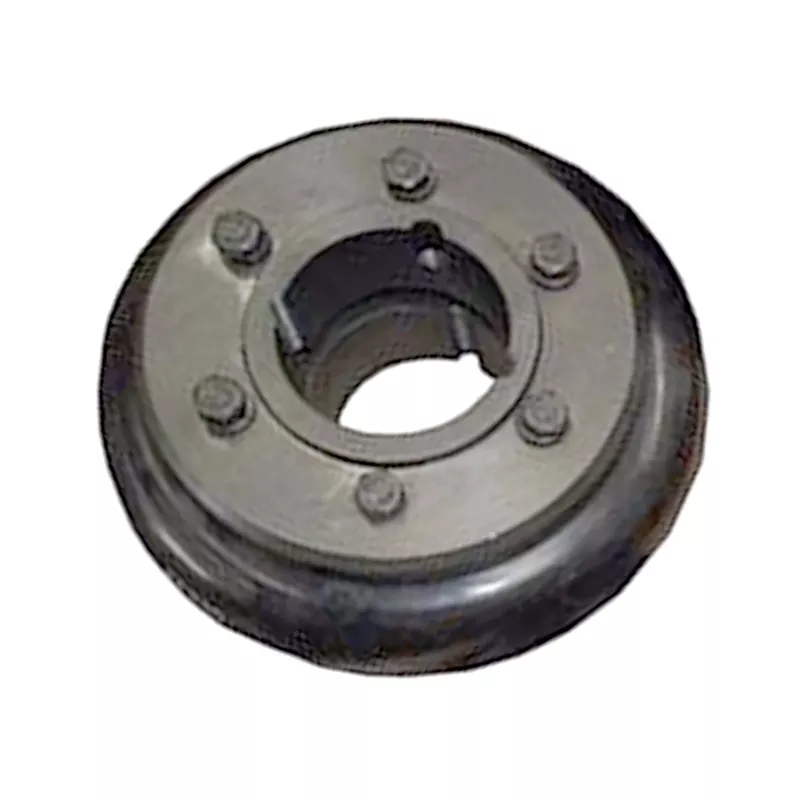
What industries commonly use flexible couplings for power transmission?
Flexible couplings are widely used in various industries for power transmission and motion control applications. Their ability to accommodate misalignment, dampen vibrations, and protect equipment from shock loads makes them valuable components in many industrial processes. Here are some of the industries that commonly utilize flexible couplings:
- Manufacturing: Flexible couplings are extensively used in manufacturing industries such as automotive, aerospace, electronics, and consumer goods production. They play a critical role in transmitting power between motors and various machinery, including conveyor systems, robots, and assembly lines.
- Oil and Gas: In the oil and gas industry, flexible couplings are used in pumps, compressors, turbines, and generators. They help transfer power in offshore platforms, refineries, pipelines, and drilling operations while compensating for the dynamic nature of these applications.
- Power Generation: Power plants, both conventional and renewable, rely on flexible couplings to transmit power from turbines and generators to electrical generators. They are used in coal-fired, natural gas, nuclear, hydroelectric, and wind power plants.
- Mining: In mining operations, flexible couplings are employed in various equipment, including conveyor systems, crushers, and large industrial pumps. They are designed to withstand the heavy loads and harsh conditions commonly found in mining environments.
- Marine: Flexible couplings are essential in marine propulsion systems, connecting engines to propellers or water jets. They also find use in shipboard machinery, auxiliary systems, and offshore applications.
- Pulp and Paper: The pulp and paper industry relies on flexible couplings in machinery used for wood processing, pulp production, papermaking, and printing processes.
- Chemical and Petrochemical: In chemical plants and petrochemical refineries, flexible couplings are utilized in pumps, mixers, agitators, and other rotating equipment to ensure efficient power transmission and protect sensitive machinery.
- Construction: The construction industry employs flexible couplings in various equipment, such as concrete pumps, cranes, excavators, and drilling machines.
- Water and Wastewater: Flexible couplings are used in water treatment plants, wastewater facilities, and irrigation systems to transfer power between motors and pumps.
- Agriculture: In agricultural machinery, flexible couplings are utilized in tractors, harvesters, and irrigation systems, enabling efficient power transmission and operation.
The versatility and adaptability of flexible couplings make them indispensable components in a wide range of industries, contributing to increased equipment reliability, reduced downtime, and improved overall system performance.


editor by CX 2024-02-10