
Product Description
flexible shaft jaw coupling for CNC machine aluminum motor coupler
Quick Details:
Structure: Jaw / Spider
Flexible or Rigid: Flexible
Standard or Nonstandard: Standard
Material: Aluminium
Brand Name: YD
Place of Origin: ZheJiang , China (Mainland)
Certificate: ISO9001:2008
Bore forming: Made by CNC centres
Unique Feature: Exquisite Workmanship
Bore Size: Meet inch dimension
Invertory: In stock
Spider color: Red (Green and Yellow selected)
Model Number:flexible shaft coupling for 3D printer
inner Bore Dmin: 3-14mm
Inner Bore Dmax: 10-45mm
Diameter: 30mm
Length: 20-114mm
Allowable speed: 15200min-1
Invertory: In stock
Features:
1. Light weight, smal moment of inertia and high torque.
2. Getting the drive vibration buffer, and absorbing the impact generated by motor’s uneven operation
3. Effectively correcting the installation deviation of axial and radial and angular
Your kind response of below questions will help us to recommed the most suitable model to you asap.
1.Are you looking for JM type(setscrew) or JM-C type(clamp)?
2.What is coupling outer dimeter size?
3.What is coupling inner bore size and length?
4.What is coupling material(aluminium or Stainless steel )?
Dimensions:
| Model
|
Inner Diameter | Outer Diameter |
Length | Torque(N.M.) | |||
| D1 | D2 | ||||||
| Min. | Max. | Min. | Max. | ||||
| JM14 | 3 | 7 | 3 | 7 | 14 | 22 | 0.7 |
| JM16 | 3 | 7 | 3 | 7 | 16 | 22 | 0.7 |
| JM20 | 4 | 10 | 4 | 10 | 20 | 30 | 1.7 |
| JM25 | 4 | 12 | 4 | 12 | 25 | 34 | 1.7 |
| JM30 | 5 | 16 | 5 | 16 | 30 | 35 | 1.7 |
| JM40 | 6 | 24 | 6 | 24 | 40 | 66 | 4.0 |
| JM55 | 8 | 28 | 8 | 28 | 55 | 78 | 4.0 |
| JM65 | 10 | 38 | 10 | 38 | 65 | 90 | 15.0 |
| JM80 | 12 | 45 | 12 | 45 | 80 | 114 | 15.0 |
| JM95 | 14 | 55 | 14 | 55 | 95 | 126 | 15.0 |
| JM105 | 15 | 62 | 15 | 62 | 105 | 140 | 15.0 |
| JM120 | 20 | 74 | 20 | 74 | 120 | 160 | 32.0 |
| JM135 | 22 | 80 | 22 | 80 | 135 | 185 | 32.0 |
Packaging Details:
Wooden or ply cases for export standard or according to the customers
Delivery Detail:3-5 days after receiving the 30% deposit
Contact Us
/* March 10, 2571 17:59:20 */!function(){function s(e,r){var a,o={};try{e&&e.split(“,”).forEach(function(e,t){e&&(a=e.match(/(.*?):(.*)$/))&&1
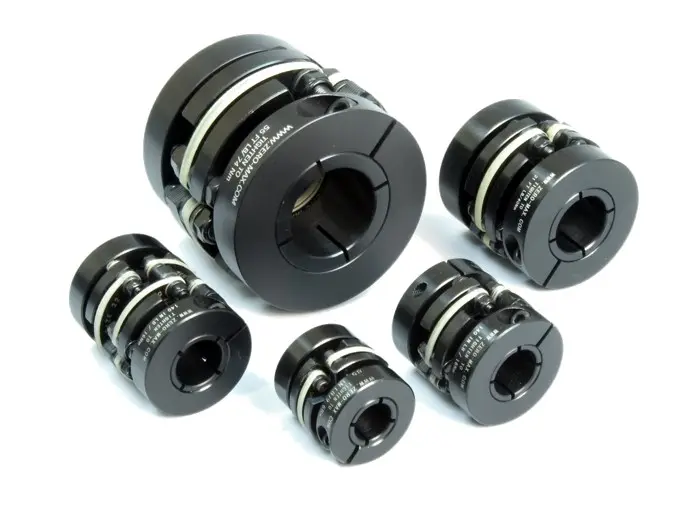
Is it Possible to Replace a Motor Coupling Without Professional Assistance?
Yes, it is possible to replace a motor coupling without professional assistance, but it requires some mechanical knowledge and proper tools. Here are the steps to replace a motor coupling:
1. Safety First:
Before attempting any maintenance or replacement, ensure the motor and driven equipment are turned off and disconnected from the power source to prevent accidents.
2. Identify the Coupling Type:
Determine the type of motor coupling currently installed in the system. Different coupling types may have slightly different installation methods.
3. Gather Necessary Tools:
Collect the necessary tools, such as wrenches, socket set, screwdrivers, and any other specific tools required for the particular coupling type.
4. Remove Fasteners:
Loosen and remove the fasteners that secure the coupling to the motor and driven equipment shafts. Keep track of the fasteners to ensure they are reinstalled correctly.
5. Disconnect the Coupling:
Disconnect the coupling from both the motor and driven equipment shafts. Depending on the coupling type, this may involve sliding the coupling off the shafts or unbolting it from the flanges.
6. Inspect the Coupling:
Inspect the old coupling for signs of wear, damage, or misalignment. This assessment will help determine if the coupling replacement is necessary.
7. Install the New Coupling:
Place the new coupling onto the motor and driven equipment shafts, ensuring it fits properly and aligns with any keyways or grooves.
8. Reattach Fasteners:
Tighten and secure the fasteners to hold the new coupling in place. Follow the manufacturer’s recommended torque values for the specific coupling model.
9. Perform Trial Run:
Before full operation, perform a trial run to check the coupling’s performance and ensure everything is working correctly. Monitor for any abnormal vibrations or noises.
10. Regular Maintenance:
After replacement, follow regular maintenance practices to inspect the coupling and the entire power transmission system for any signs of wear or issues.
While it is possible to replace a motor coupling without professional assistance, keep in mind that improper installation or failure to diagnose other underlying issues may lead to further problems. If you are unsure about the process or encounter difficulties during the replacement, it is always best to seek the help of a qualified technician or engineer to ensure a successful and safe coupling replacement.
“`
Explaining the Concept of Backlash and Its Impact on Motor Coupling Performance
Backlash is a critical factor in motor coupling performance and refers to the clearance or play between mating components within the coupling. In the context of motor couplings, it specifically relates to the amount of free movement or angular displacement that occurs when there is a change in direction of the driven shaft without a corresponding immediate change in the driving shaft.
Backlash in motor couplings can occur due to several factors:
- Manufacturing Tolerances: Variations in the manufacturing process can lead to slight clearances between coupling components, introducing backlash.
- Wear and Tear: Over time, the coupling components may experience wear, leading to increased clearance and backlash.
- Misalignment: Improper alignment between the motor and driven equipment shafts can cause additional play in the coupling, resulting in increased backlash.
The impact of backlash on motor coupling performance includes the following:
1. Reduced Accuracy:
Backlash can lead to inaccuracies in motion transmission. When the direction of rotation changes, the free play in the coupling must be taken up before torque can be effectively transmitted. This delay in motion transfer can cause positioning errors and reduced accuracy in applications requiring precise movements.
2. Vibration and Noise:
Excessive backlash can cause vibration and noise during operation. The sudden engagement of the coupling components after a change in direction can create shocks and vibrations that may affect the overall system performance and lead to premature wear of coupling components.
3. Reduced Efficiency:
Backlash results in power loss, especially in applications with frequent changes in direction. The energy required to take up the clearance in the coupling reduces the overall efficiency of power transmission.
4. Wear and Fatigue:
Repeated impacts due to backlash can accelerate wear and fatigue of coupling components, leading to a shorter lifespan and potential coupling failure.
5. Safety Concerns:
In certain applications, particularly those involving heavy machinery or high-speed operations, excessive backlash can pose safety risks. The lack of immediate response to directional changes can affect the control and stability of the equipment.
To mitigate the effects of backlash, it is essential to select motor couplings with low or controlled backlash and to maintain proper alignment during installation. Regular inspection and maintenance can help identify and address any increasing backlash, ensuring the motor coupling operates with optimum performance and reliability.
“`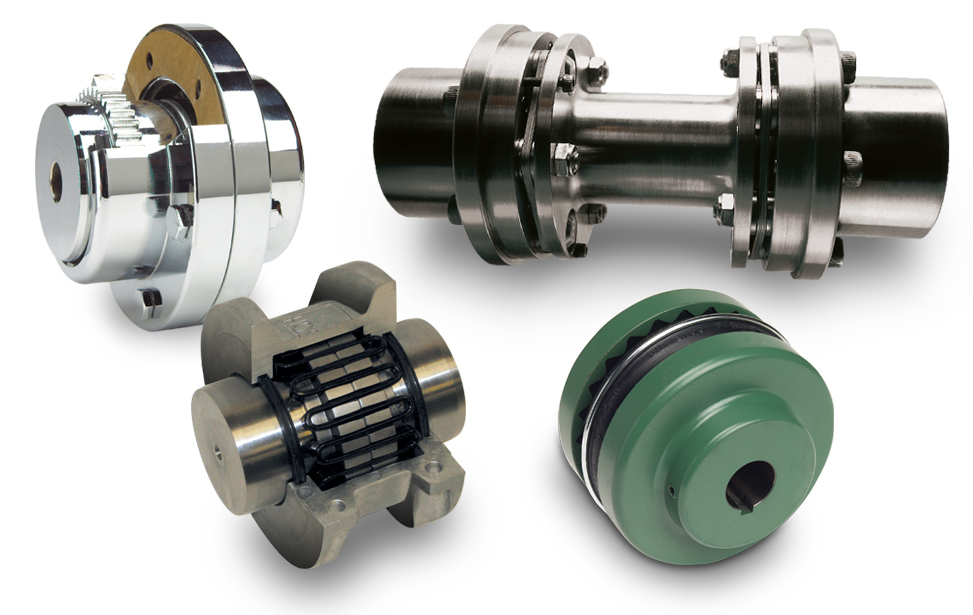
Types of Motor Couplings and Their Applications in Different Industries
Motor couplings come in various types, each designed to meet specific requirements and applications in different industries. Here are some common types of motor couplings and their typical uses:
1. Rigid Couplings:
Rigid couplings provide a solid and inflexible connection between the motor shaft and the driven equipment. They are ideal for applications where precise alignment and torque transmission are critical. Rigid couplings are commonly used in machine tools, robotics, and high-precision industrial equipment.
2. Flexible Couplings:
Flexible couplings are designed to accommodate misalignment between the motor and driven equipment shafts. They can handle angular, parallel, and axial misalignment, reducing stress on bearings and increasing the system’s flexibility. Flexible couplings find applications in pumps, compressors, conveyors, and other machinery where misalignment may occur due to vibration or thermal expansion.
3. Gear Couplings:
Gear couplings use toothed gears to transmit torque between the motor and the driven equipment. They provide high torque capacity and are suitable for heavy-duty applications, such as steel rolling mills, cranes, and marine propulsion systems.
4. Disc Couplings:
Disc couplings use thin metal discs to transmit torque. They offer high torsional stiffness, allowing precise motion control in applications like servo systems, CNC machines, and robotics.
5. Jaw Couplings:
Jaw couplings use elastomeric elements to dampen vibrations and accommodate misalignment. They are commonly used in small electric motors and general-purpose machinery.
6. Bellows Couplings:
Bellows couplings have a flexible accordion-like structure that compensates for misalignment while maintaining torsional rigidity. They are used in vacuum systems, optical equipment, and other high-precision applications.
7. Grid Couplings:
Grid couplings use a flexible grid element to transmit torque and dampen vibrations. They are suitable for applications in pumps, compressors, and conveyor systems where shock loads and misalignment are common.
8. Magnetic Couplings:
Magnetic couplings use magnetic fields to transmit torque between the motor and driven equipment. They are commonly used in applications requiring hermetic sealing, such as pumps and mixers handling hazardous or corrosive fluids.
Each type of motor coupling offers unique advantages and is chosen based on the specific needs of the industry and the application. Proper selection and installation of the right coupling type enhance efficiency, reliability, and safety in motor-driven systems across various industries.
“`

editor by CX 2024-02-07