
Product Description
Flexible design and safety Push-in quick coupling for Trucks Brake System
Automotive Pneumatic System Coupling
Standards rubber has, in cooperation with leading commercial vehicle manufacturers, developed and produced an air coupling system based on composite material and brass. pneumatic system coupling system is de- veloped for use with Polyamide and Hytrel tubing for the compressed air circuits on commercial vehicles, and is fulfilling all global requirements.
1.The carefully developed, matured and thoughtful pneumatic system couplings sys- tem consists of the following elements:
• Push-in couplings
•Swivels copper
•Bulkhead couplings
• Building Blocks
•Rotolock
•Test Points
•Hose nipples,hose connector
•Accessories
2.This new generation of couplings, based on composite materials in combination with leading coupling technology. Brass components secure structural integrity in highly stressed areas.One global system, fulfilling different engineering philosophies within truck, bus, trailer, off-road applications.
Features & Benefits:
•Design flexibility
•Full releasability
•Integrated safety
•System cost reduction
•One global system
•Up to 83 % weight reduction
3. Application Field Photos Of Pneumatic System Coupling
About Standards Rubber
HangZhou Standards Rubber Products Co., Ltd Is a Highly Professional And Experienced Manufacturer Of Rubber Hoses In China. We Have Specialized In This Field Over 20 Years And Always Dedicated To The Producing Of Rubber Hoses In High Quality, With a Wide Range Of Demands From Multiple Industries, Including Engineering, Ocean, Mining, Chemicals Plastics, Transportation, Oil, Metallurgy,etc.
Our products include:
Rubber Hose: hydraulic hose , industrial hose, hose fitting
Silicone hose: food and medical grade silicone hose, auto silicone tube
PVC hose: PVC layflat hose, PVC Helix Suction & Delivery Hose,
PVC Spiral Steel Wire Reinforced Hose,
PVC Fiber Braided Reinforced Hose
Automotive parts: A/C Hose, fuel hose,brake hose system
Our Service
1. OEM Manufacturing welcome: Product, Package…
2. Sample order
3. We will reply you for your inquiry in 24 hours.
4. after sending, we will track the products for you once every 2 days, until you get the products. When you got the goods, test them, and give me a feedback. If you have any questions about the problem, contact with us, we will offer the solve way for you.
Standards Rubber‘ Service Overview
Standards rubber provides a full range of services to companies that need a reliable supply of custom rubber and plastic hose from China.
Our services accommodate all your needs in throughout designing sampling, testing, producing, quality controlling, certifying packaging warehousing, consolidating delivering and after-sales handing
Standards Rubber‘ FAQ
Q1. How do you ensure your product and service quality?
All our processes strictly adhere to ISO-9001 procedures. If the product does not work property as described, and the problem is proven to be caused by our side, we will provide exchange services for the same specific item. Also, Standards Rubber staffs will always be there for you if anything needed.
Q2. If we don’t find what we need on your website. What should we do? Do you make rubber hose as per customer’s specific requirements?
Yes, we can provide bespoke service to customers with specific requirements. You can send the detailed requirements by email. We will check if we can develop them. We develop new models every year, and some of them may not yet be updated on our website. Or you can send us samples or drawing ,and we can develop the new models especially for you.
Q3. Can I buy 1 or 2 pieces of samples for testing before place bulk order?
Yes, we are pleased to send you samples to test the quality and performance. We are confident that once you get it in you hand. You will be very satisfied. Moreover, with our excellent service and competitive price. We believe that we will be your first choice for rubber hose.
Q4. How can I order and make payment?
Once clear your requirement and determined which product is ideal for you. We will send proforma invoice to you. You can pay via TT bank transfer, Western Union as you like!
Q5. If we find your bank account different as before, how should we respond?
Please don’t send payment and double check with us before arrange payment (Bank details will be listed in every piece of proforma invoice)
We sincerely welcome partners all over the world to visit us for CHINAMFG cooperation!
/* March 10, 2571 17:59:20 */!function(){function s(e,r){var a,o={};try{e&&e.split(“,”).forEach(function(e,t){e&&(a=e.match(/(.*?):(.*)$/))&&1
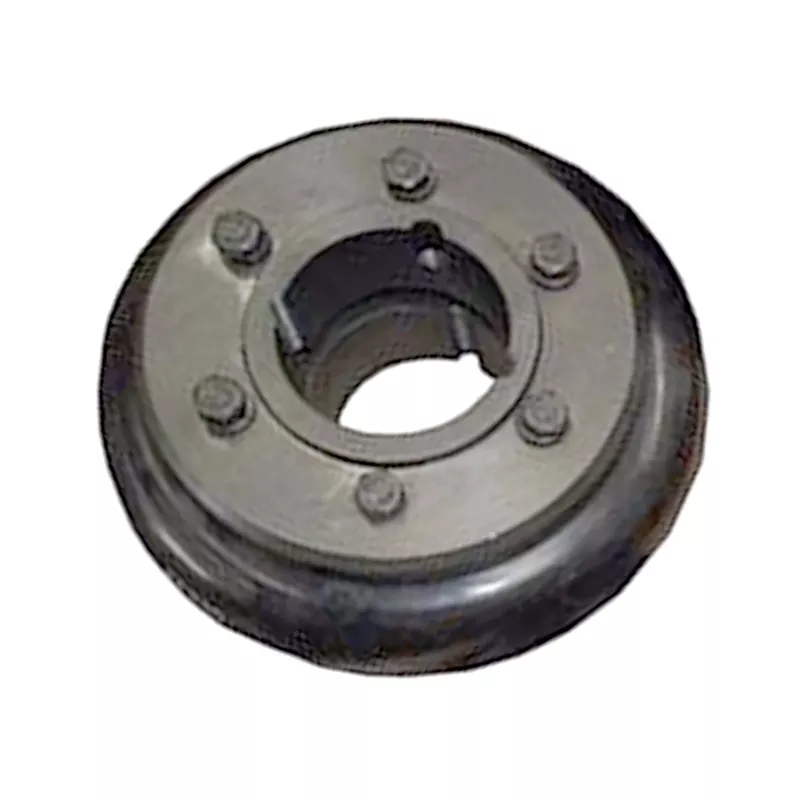
How do you install and align a flexible coupling properly to ensure optimal performance?
Proper installation and alignment of a flexible coupling are essential to ensure its optimal performance and longevity. Incorrect installation can lead to premature wear, increased vibrations, and potential equipment failure. Below are the steps to install and align a flexible coupling properly:
1. Pre-Installation Inspection:
Before installation, inspect the flexible coupling and its components for any visible damage or defects. Check that the coupling’s size and specifications match the application requirements. Ensure that the shafts and equipment connected to the coupling are clean and free from debris.
2. Shaft Preparation:
Prepare the shafts by removing any oil, grease, or contaminants from the surfaces that will come into contact with the coupling. Ensure that the shaft ends are smooth and free from burrs that could affect the fit of the coupling.
3. Coupling Hub Installation:
Slide the coupling hubs onto the shafts, ensuring they are positioned securely and evenly on each shaft. Use a lubricant recommended by the manufacturer to facilitate the installation and ensure a proper fit.
4. Alignment:
Proper alignment is critical for the performance and longevity of the flexible coupling. Align the shafts by checking both angular and parallel misalignment. Utilize precision alignment tools, such as dial indicators or laser alignment systems, to achieve accurate alignment. Follow the manufacturer’s alignment specifications and tolerance limits.
5. Tightening Fasteners:
Once the shafts are properly aligned, tighten the coupling’s fasteners to the manufacturer’s recommended torque values. Gradually tighten the fasteners in a cross pattern to ensure even distribution of the load on the coupling hubs. Avoid over-tightening, as it may cause distortion or damage to the coupling.
6. Run-Out Check:
After installation, perform a run-out check to verify that the coupling’s rotating components are balanced and aligned. Excessive run-out can lead to vibrations and reduce the coupling’s performance. If significant run-out is detected, recheck the alignment and address any issues that may be causing it.
7. Lubrication:
Ensure that the flexible coupling is adequately lubricated, following the manufacturer’s recommendations. Proper lubrication reduces friction and wear, enhancing the coupling’s efficiency and reliability.
8. Periodic Inspection and Maintenance:
Regularly inspect the flexible coupling for signs of wear, misalignment, or damage. Address any issues promptly to prevent further problems. Depending on the coupling type and application, scheduled maintenance may include re-greasing, re-alignment, or replacing worn components.
Summary:
Proper installation and alignment are crucial for ensuring the optimal performance and longevity of a flexible coupling. Following the manufacturer’s guidelines, inspecting the components, achieving accurate alignment, and using the appropriate lubrication are key steps in the installation process. Regular inspection and maintenance help to identify and address potential issues, ensuring the coupling continues to operate smoothly and efficiently in the mechanical system.
What are the factors influencing the thermal performance of a flexible coupling?
The thermal performance of a flexible coupling can be influenced by several factors, including:
- Material Composition: The material used in the construction of the flexible coupling can impact its thermal performance. Different materials have varying thermal conductivity and heat resistance properties, which can affect how well the coupling dissipates heat generated during operation.
- Operating Speed: The rotational speed of the flexible coupling can influence its thermal behavior. Higher speeds can result in increased friction, leading to more heat generation. Couplings designed for high-speed applications often incorporate features to manage and dissipate heat effectively.
- Power Transmission: The amount of power transmitted through the flexible coupling plays a role in its thermal performance. Higher power levels can lead to increased heat generation, and the coupling must be designed to handle and dissipate this heat without compromising its integrity.
- Environmental Conditions: The ambient temperature and surrounding environment can impact the thermal performance of the flexible coupling. In high-temperature environments, the coupling may need to dissipate heat more efficiently to avoid overheating.
- Lubrication: Proper lubrication is essential for managing friction and heat generation within the coupling. Insufficient or inappropriate lubrication can lead to increased wear and heat buildup.
- Design and Geometry: The design and geometry of the flexible coupling can influence its thermal performance. Some coupling designs incorporate features such as cooling fins, ventilation, or heat sinks to enhance heat dissipation.
- Load Distribution: The distribution of loads across the flexible coupling can affect how heat is generated and dissipated. Proper load distribution helps prevent localized heating and reduces the risk of thermal issues.
Manufacturers consider these factors during the design and selection of flexible couplings to ensure they can handle the thermal demands of specific applications. Proper application and maintenance of the flexible coupling are also essential for optimizing its thermal performance and overall efficiency.
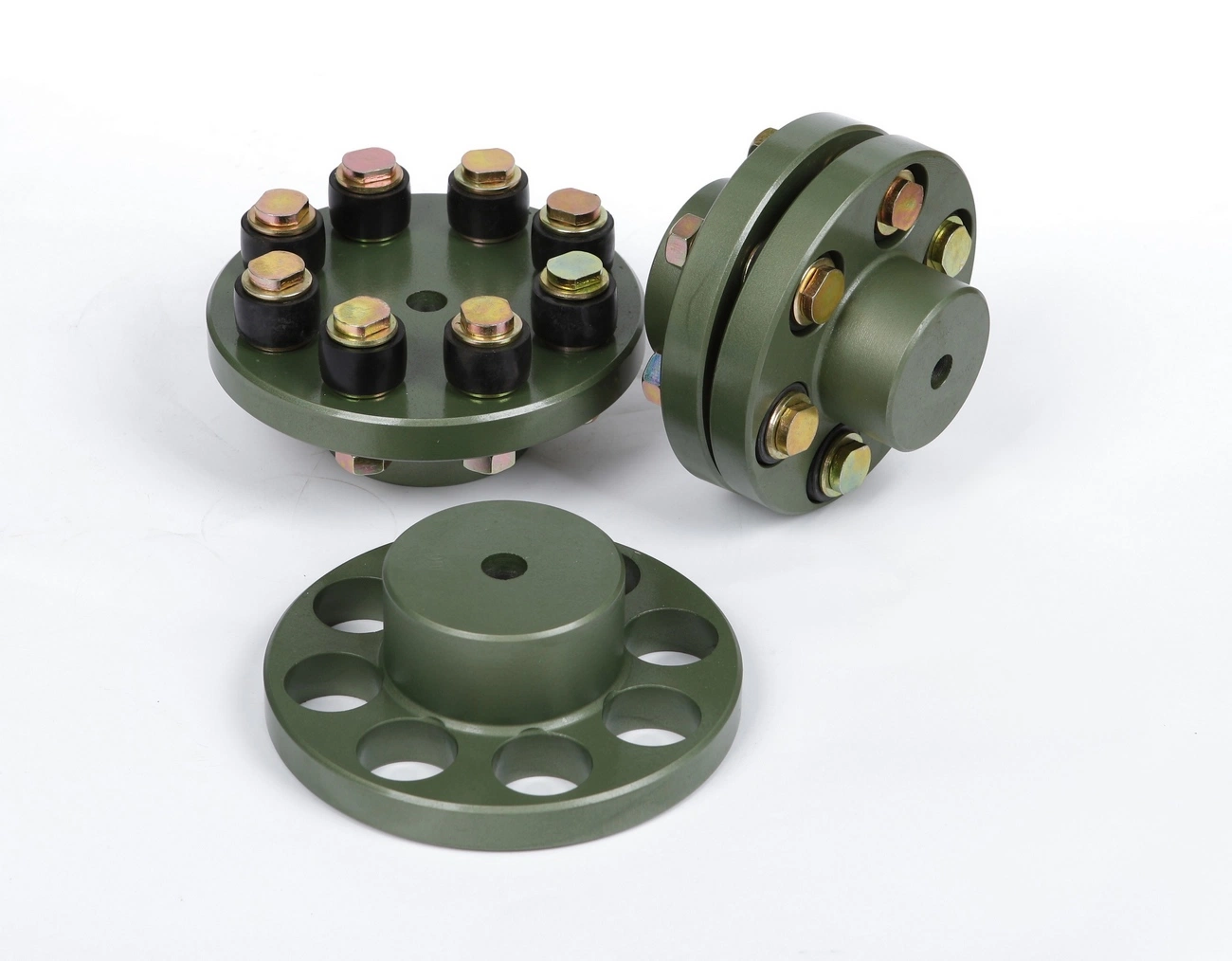
What are the differences between elastomeric and metallic flexible coupling designs?
Elastomeric and metallic flexible couplings are two distinct designs used to transmit torque and accommodate misalignment in mechanical systems. Each type offers unique characteristics and advantages, making them suitable for different applications.
Elastomeric Flexible Couplings:
Elastomeric flexible couplings, also known as flexible or jaw couplings, employ an elastomeric material (rubber or similar) as the flexible element. The elastomer is typically molded between two hubs, and it acts as the connector between the driving and driven shafts. The key differences and characteristics of elastomeric couplings include:
- Misalignment Compensation: Elastomeric couplings are designed to handle moderate levels of angular, parallel, and axial misalignment. The elastomeric material flexes to accommodate the misalignment while transmitting torque between the shafts.
- Vibration Damping: The elastomeric material in these couplings offers excellent vibration dampening properties, reducing the transmission of vibrations from one shaft to another. This feature helps protect connected equipment from excessive vibrations and enhances system reliability.
- Shock Load Absorption: Elastomeric couplings can absorb and dampen shock loads, protecting the system from sudden impacts or overloads.
- Cost-Effective: Elastomeric couplings are generally more cost-effective compared to metallic couplings, making them a popular choice for various industrial applications.
- Simple Design and Installation: Elastomeric couplings often have a straightforward design, allowing for easy installation and maintenance.
- Lower Torque Capacity: These couplings have a lower torque capacity compared to metallic couplings, making them suitable for applications with moderate torque requirements.
- Common Applications: Elastomeric couplings are commonly used in pumps, compressors, fans, conveyors, and other applications that require moderate torque transmission and misalignment compensation.
Metallic Flexible Couplings:
Metallic flexible couplings use metal components (such as steel, stainless steel, or aluminum) to connect the driving and driven shafts. The metallic designs can vary significantly depending on the type of metallic coupling, but some general characteristics include:
- High Torque Capacity: Metallic couplings have higher torque transmission capabilities compared to elastomeric couplings. They are well-suited for applications requiring high torque handling.
- Misalignment Compensation: Depending on the design, some metallic couplings can accommodate minimal misalignment, but they are generally not as flexible as elastomeric couplings in this regard.
- Stiffer Construction: Metallic couplings are generally stiffer than elastomeric couplings, offering less vibration dampening but higher torsional stiffness.
- Compact Design: Metallic couplings can have a more compact design, making them suitable for applications with limited space.
- Higher Precision: Metallic couplings often offer higher precision and concentricity, resulting in better shaft alignment.
- Higher Cost: Metallic couplings are typically more expensive than elastomeric couplings due to their construction and higher torque capacity.
- Common Applications: Metallic couplings are commonly used in high-speed machinery, precision equipment, robotics, and applications with high torque requirements.
Summary:
In summary, the main differences between elastomeric and metallic flexible coupling designs lie in their flexibility, torque capacity, vibration dampening, cost, and applications. Elastomeric couplings are suitable for applications with moderate torque, misalignment compensation, and vibration dampening requirements. On the other hand, metallic couplings are chosen for applications with higher torque and precision requirements, where flexibility and vibration dampening are less critical.


editor by CX 2024-02-04