
Product Description
HDPE pipe can be used in a variety of applications, the product is cheaper than other pipes and easy to construct. Widely used in water supply system, agricultural irrigation, fire water supply system.
PE pipe fittings and pipe fittings professional manufacturers export to all over the world quality products, quality service
Product Description
Application area:
1) Pipe for hot and cold water,drinking water system
2) Pipe for heating ,floor and wall warming system, melting snow in north building
3) Pipe for solar heating system ,hot and cold device
4) Pipe for transproting oil and coling liquid
5) Pipe for air contaditioning external connecting
6) Pipe for transporting oxygen in hospital
Product Parameters
| Part | Material |
| Body(A) | Polypropylene co-polymer(PP-B) of exceptional mechanical properties even at high temperature. |
| Blocking bush(D) | Polypropylene |
| Nut(B) | Polypropylene with dye master of high stability to UV rays andsolidity to heat( S grade according to standard DIN54004) |
| Clinching ring(C) | Polyacetal resin(POM)with high mechanical resistance And hardness |
| O Ring gasket(E) | Special elastomeric rubber(EPDM) for alimentary use |
| Reinforcing ring | AISI 430 (UNI X8Cr17,W,nr 14828)Stainless steel for female threads from 1″to 4″ |
Material: PE,
Sizes: 20mm to1200mm
Pressure Rating: 10MPa, 16MPa, 20MPa, 30MPa
Colors: black or other colors on request
| product standard | |||||||||
| specification | 20 | 25 | 32 | 40 | 50 | 63 | 75 | 90 | 110 |
All pipes and fittings produce with 100% virgin material .
| inch | dn (mm) | SDR/PN | ||||
| SDR26/0.6MPa | SDR21/0.8MPa | SDR17/1.0MPa | SDR13.6/1.25MPa | SDR11/1.6MPa | ||
| Thickness | Thickness | Thickness | Thickness | Thickness | ||
| mm | mm | mm | mm | mm | ||
| 1/2″ | 20 | 2.3 | ||||
| 3/4″ | 25 | 2.3 | ||||
| 1″ | 32 | 2.3 | 2.4 | 3.0 | ||
| 1 1/4″ | 40 | 2.3 | 2.4 | 3.0 | 3.7 | |
| 1 1/2″ | 50 | 2.3 | 2.4 | 3.0 | 3.7 | 4.6 |
| 2″ | 63 | 2.5 | 3.0 | 3.8 | 4.7 | 5.8 |
| 2 1/2″ | 75 | 2.9 | 3.6 | 4.5 | 5.6 | 6.8 |
| 3″ | 90 | 3.5 | 4.3 | 5.4 | 6.7 | 8.2 |
| 4″ | 110 | 4.2 | 5.3 | 6.6 | 8.1 | 10 |
| 4 1/2″ | 125 | 4.8 | 6.0 | 7.4 | 9.2 | 11.4 |
| 5″ | 140 | 5.4 | 6.7 | 8.3 | 10.3 | 12.7 |
| 6″ | 160 | 6.2 | 7.7 | 9.5 | 11.8 | 14.6 |
| 7″ | 180 | 6.9 | 8.6 | 10.7 | 13.3 | 16.4 |
| 8″ | 200 | 7.7 | 9.6 | 11.9 | 14.7 | 18.2 |
| 9″ | 225 | 8.6 | 10.8 | 13.4 | 16.6 | 20.5 |
| 10″ | 250 | 9.6 | 11.9 | 14.8 | 18.4 | 22.7 |
| 11″ | 280 | 10.7 | 13.4 | 16.6 | 20.6 | 25.4 |
| 12″ | 315 | 12.1 | 15.0 | 18.7 | 23.2 | 28.6 |
| 14″ | 355 | 13.6 | 16.9 | 21.1 | 26.1 | 32.2 |
| 16″ | 400 | 15.3 | 19.1 | 23.7 | 29.4 | 36.3 |
| 18″ | 450 | 17.2 | 21.5 | 26.7 | 33.1 | 40.9 |
| 20″ | 500 | 19.1 | 23.9 | 29.7 | 36.8 | 45.4 |
| 22″ | 560 | 21.4 | 26.7 | 33.2 | 41.2 | 50.8 |
| 24″ | 630 | 24.1 | 30.0 | 37.4 | 46.3 | 57.2 |
| 28″ | 710 | 27.2 | 33.9 | 42.1 | 52.2 | 64.6 |
| 32″ | 800 | 30.6 | 38.1 | 47.4 | 58.8 | 72.7 |
Installation Instructions
other products
The company produces various other PPR pipes and accessories if you need to click the home page to see more.
What fittings are used with HDPE pipe?
HDPE Pipe Fittings
- Thermal Butt (Butt fusion)
- Thermal bushing.
- Electro Fusion.
- Flange.
- Extrusion.
- Bolting.
- Rubber gasket latching.
Company Profile
ZheJiang Shitong Plastic Co., LTD. Registered address is located in North ShiHangZhou Village, Xihu (West Lake) Dis.cheng District, HangZhou City, registered authority is Xihu (West Lake) Dis.cheng District Market Supervision Administration, legal representative for CZPT Wentao, business scope includes plastic plate, pipe, profile manufacturing. Water supply and drainage pipe and pipe fittings production, processing, marketing; Building materials, hardware tools, mechanical and electrical products, wires, cables, electrical switches, daily necessities, electrical wholesale, retail; It is engaged in the export business of its own products and technologies and the import business of raw and auxiliary materials, instruments and meters, machinery and equipment, spare parts and technologies needed by its own enterprises, except the commodities and technologies that are restricted by the state or prohibited from being imported and exported; Municipal engineering, construction and installation engineering, housing construction engineering, landscape engineering, water conservancy engineering, pipeline engineering, fire protection engineering, indoor and outdoor decoration engineering, bridge engineering, environmental protection engineering construction.
certificate
Our Advantages
1. Create high quality, low price and low profit, small profits but quick turnover.
2. The pipe fittings of the manufacturer can be customized to meet your wishes.
3. Professional construction experience and production experience can reasonably reduce costs for your needs.
4. We own complete testing equipment to ensure quality.
FAQ
1.Are you a factory or a trading company?
We are a foreign trade team formed by the internal staff of the factory.
2.How is your manufacturing capability?
China’s old-fashioned manufacturer, the domestic market has cooperated with the local government and local leading construction companies for decades.
3.What services can you provide?
Problems encountered in the construction can be solved. If there is a problem with the pipeline, we will try our best to solve it or reissue it later.
4.Can you change the size for customers?
Of course, the product will be customized according to your needs, but the payment method requires a larger deposit in advance.
5.What are the advantages of your product?
High quality medium quality according to your needs, but fully up to standard and meet your needs, the price is lower than the market price.
6.Can you provide samples?
Yes, but you need to pay for shipping.
7.What are your payment terms?
We accept TT and L/C, and we will issue an account after multiple cooperations.
8.How is the delivery time?
Depending on the quantity of goods, most requirements are generally met within 20 days.
9.Why choose us?
Decades of production experience and construction experience will help you more than the sales value.
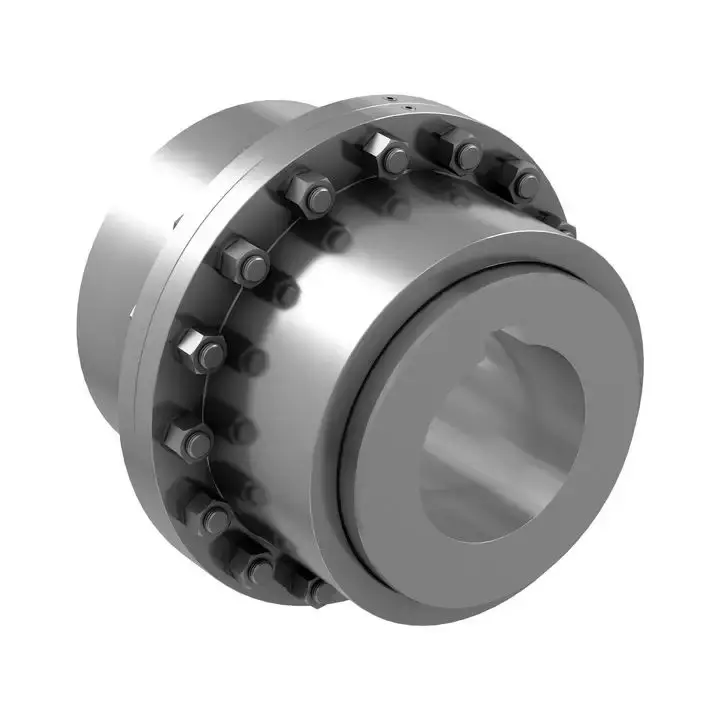
How does a flexible coupling help in power transmission efficiency?
Flexible couplings play a crucial role in improving power transmission efficiency in various mechanical systems. Here are the ways in which flexible couplings contribute to enhanced efficiency:
- Misalignment Compensation: In real-world applications, it is challenging to achieve perfect alignment between shafts due to manufacturing tolerances, thermal expansion, or external forces. Flexible couplings can accommodate both angular and parallel misalignments between the driving and driven shafts. By doing so, they ensure that the torque is transmitted smoothly and efficiently despite misalignment, reducing power losses due to misaligned shafts.
- Vibration Damping: Vibrations in mechanical systems can lead to energy losses and premature wear of components. Flexible couplings with vibration-damping properties can absorb and dampen vibrations generated during operation. By reducing the transmission of vibrations, these couplings help to maintain power transmission efficiency and extend the lifespan of connected equipment.
- Shock Load Absorption: During start-up or sudden changes in operating conditions, equipment may experience shock loads. Flexible couplings are designed to absorb and cushion these shock loads, preventing sudden impacts on the system. By minimizing the shock load’s effect, flexible couplings contribute to smoother power transmission and reduced stress on components.
- Torsional Stiffness: While flexible couplings allow for misalignment compensation, they still exhibit a certain degree of torsional stiffness. This stiffness ensures that the majority of the torque is efficiently transmitted from the driving to the driven shaft, minimizing power losses due to deformation or bending of the coupling.
- Reduced Friction and Wear: Flexible couplings typically have a simple design with fewer moving parts. This simplicity leads to reduced friction and wear compared to more complex coupling types. Lower friction means less energy dissipation, resulting in improved power transmission efficiency.
- Compatibility with Various Applications: Flexible couplings come in a wide range of designs and materials to suit different applications. Whether it’s high-speed machinery, heavy-duty equipment, or precision systems, there are flexible coupling options optimized for each use case. Selecting the appropriate coupling for the specific application ensures efficient power transmission.
In summary, flexible couplings enhance power transmission efficiency by compensating for misalignment, damping vibrations, absorbing shock loads, providing torsional stiffness, reducing friction and wear, and offering compatibility with diverse applications. The combination of these features contributes to improved overall system efficiency and helps optimize the performance of mechanical systems.
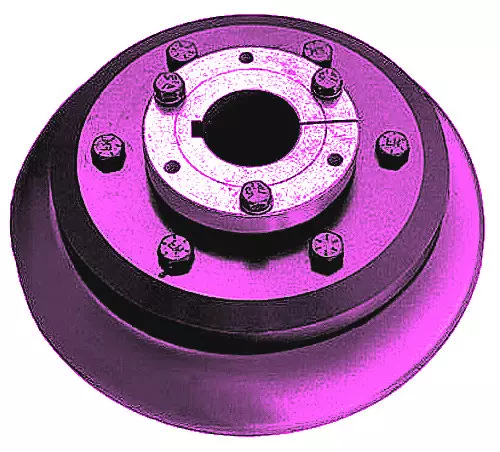
What are the key considerations for selecting a flexible coupling for high-speed applications?
When selecting a flexible coupling for high-speed applications, several critical considerations should be taken into account to ensure optimal performance and reliability:
- Material and Design: Choose a flexible coupling made from high-quality materials that can withstand the high rotational speeds without experiencing excessive wear or fatigue. Consider designs that are specifically engineered for high-speed applications, ensuring they have the required torsional stiffness and damping characteristics.
- Balance: Imbalance at high speeds can lead to vibration and reduce the lifespan of the coupling and connected components. Look for precision-balanced flexible couplings that minimize vibration and avoid any potential resonance issues at operating speeds.
- Torsional Stiffness: In high-speed applications, torsional stiffness is crucial to maintaining accurate rotational timing and preventing torque losses. Choose a flexible coupling with adequate torsional stiffness to minimize angular deflection under load.
- Dynamic Balancing: Dynamic balancing is essential for flexible couplings used in high-speed applications. A dynamically balanced coupling reduces vibrations caused by rotational imbalances, increasing the smoothness and stability of the system.
- Temperature Resistance: High-speed operations can generate significant heat, so select a flexible coupling that can withstand the elevated temperatures without compromising its mechanical properties or causing premature failure.
- Alignment and Runout Tolerance: Accurate alignment of the coupling with the shafts is crucial to prevent additional stress and vibration. Consider couplings with high runout tolerance and ease of alignment to facilitate proper installation.
- Service Life and Maintenance: Evaluate the expected service life of the flexible coupling in high-speed applications. Low-maintenance couplings are desirable to reduce downtime and maintenance costs.
- Application Specifics: Consider the specific requirements of the high-speed application, such as the magnitude of torque, axial movement, and the presence of shock loads. Choose a coupling that can handle these specific demands while maintaining performance at high speeds.
- Compliance with Standards: Ensure that the selected flexible coupling complies with relevant industry standards and specifications, especially those related to high-speed performance and safety.
By carefully considering these key factors, engineers can choose a flexible coupling that meets the demands of high-speed applications, delivering reliable and efficient power transmission while minimizing the risk of premature wear, vibration, and downtime.
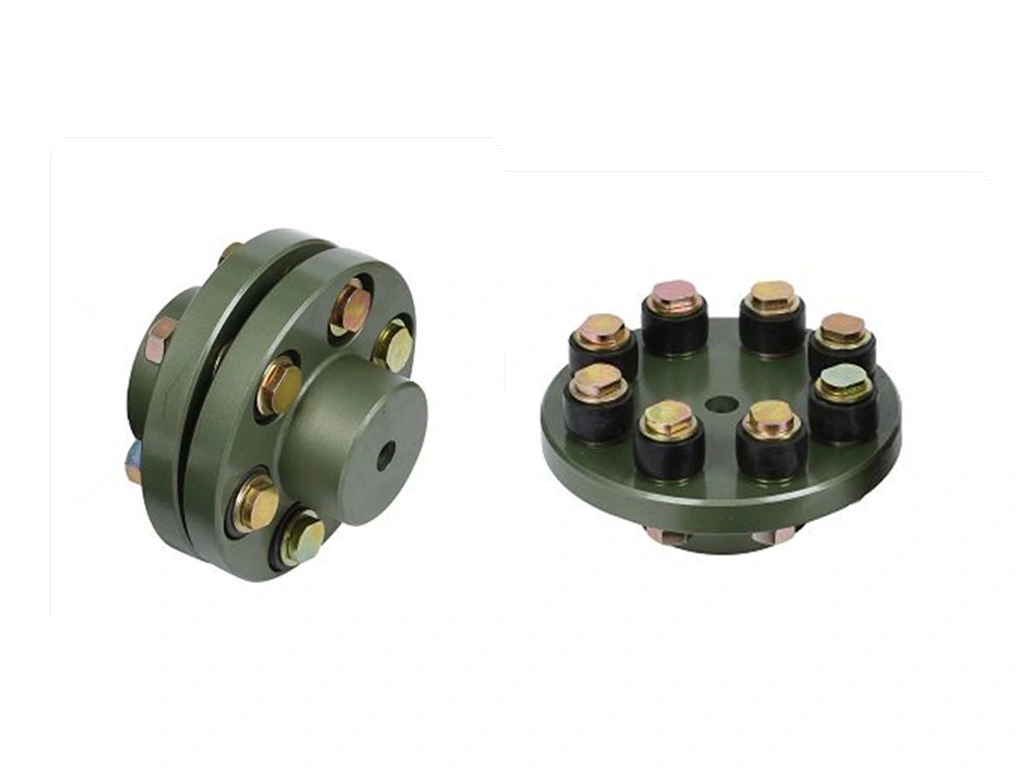
What are the factors to consider when choosing a flexible coupling for a specific system?
Choosing the right flexible coupling for a specific system requires careful consideration of several factors. The following are the key factors that should be taken into account:
- 1. Misalignment Requirements: Assess the type and magnitude of misalignment expected in the system. Different couplings are designed to handle specific types of misalignment, such as angular, parallel, or axial misalignment. Choose a coupling that can accommodate the expected misalignment to prevent premature wear and failure.
- 2. Torque Capacity: Determine the required torque capacity of the coupling to ensure it can transmit the necessary power between the shafts. Consider both the continuous and peak torque loads that the system may experience.
- 3. Operating Speed: Take into account the rotational speed of the system. High-speed applications may require couplings that can handle the additional centrifugal forces and balance requirements.
- 4. Temperature Range: Consider the operating temperature range of the system. Select a coupling material that can withstand the temperatures encountered without losing its mechanical properties.
- 5. Environment and Conditions: Evaluate the environmental conditions where the coupling will be used, such as exposure to moisture, chemicals, dust, or corrosive substances. Choose a coupling material that is compatible with the operating environment.
- 6. Space Constraints: Assess the available space for the coupling installation. Some couplings have compact designs suitable for applications with limited space.
- 7. Installation and Maintenance: Consider the ease of installation and maintenance. Some couplings may require special tools or disassembly for maintenance, while others offer quick and simple installation.
- 8. Torsional Stiffness: Evaluate the torsional stiffness of the coupling. A balance between flexibility and stiffness is essential to prevent excessive torsional vibrations while accommodating misalignment.
- 9. Shock and Vibration Damping: For applications with high shock loads or vibration, select a coupling with excellent damping characteristics to protect the system from excessive forces.
- 10. Cost and Budget: Compare the cost of the coupling with the overall budget for the system. Consider the long-term cost implications, including maintenance and replacement expenses.
Ultimately, the choice of a flexible coupling should align with the specific requirements and operating conditions of the system. Consulting with coupling manufacturers or engineering experts can provide valuable insights to ensure the optimal selection of a coupling that enhances system performance, reliability, and efficiency.


editor by CX 2023-09-05